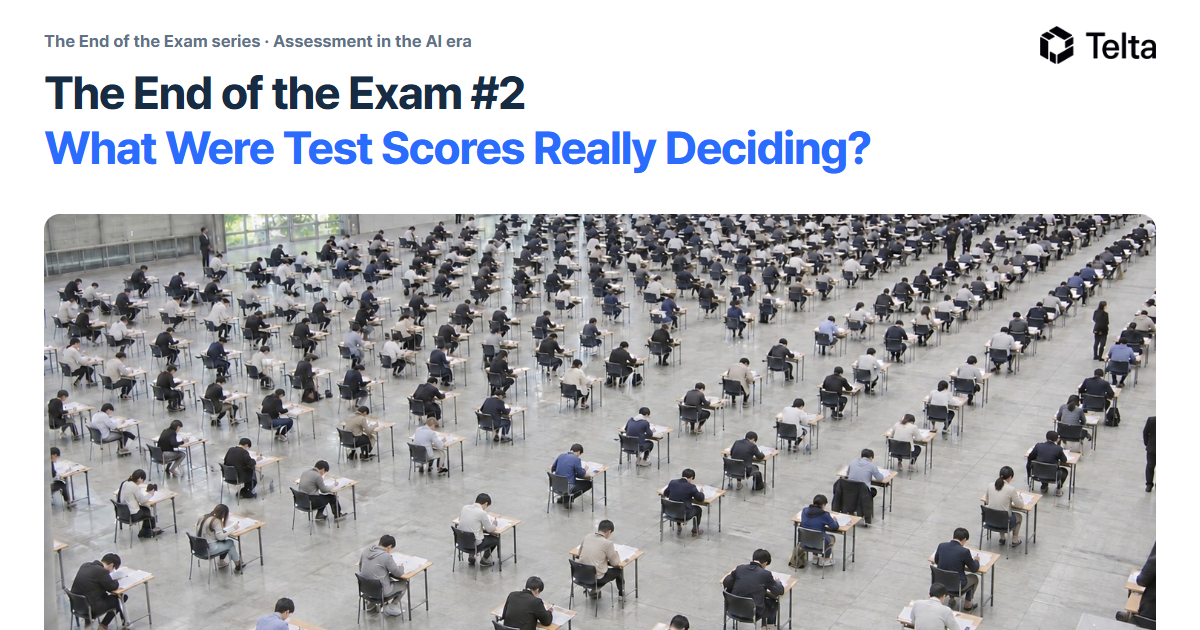
The End of the Exam #1: AI Cracked Korea’s Tax Accountant Exam. Can Proctoring Stop It?



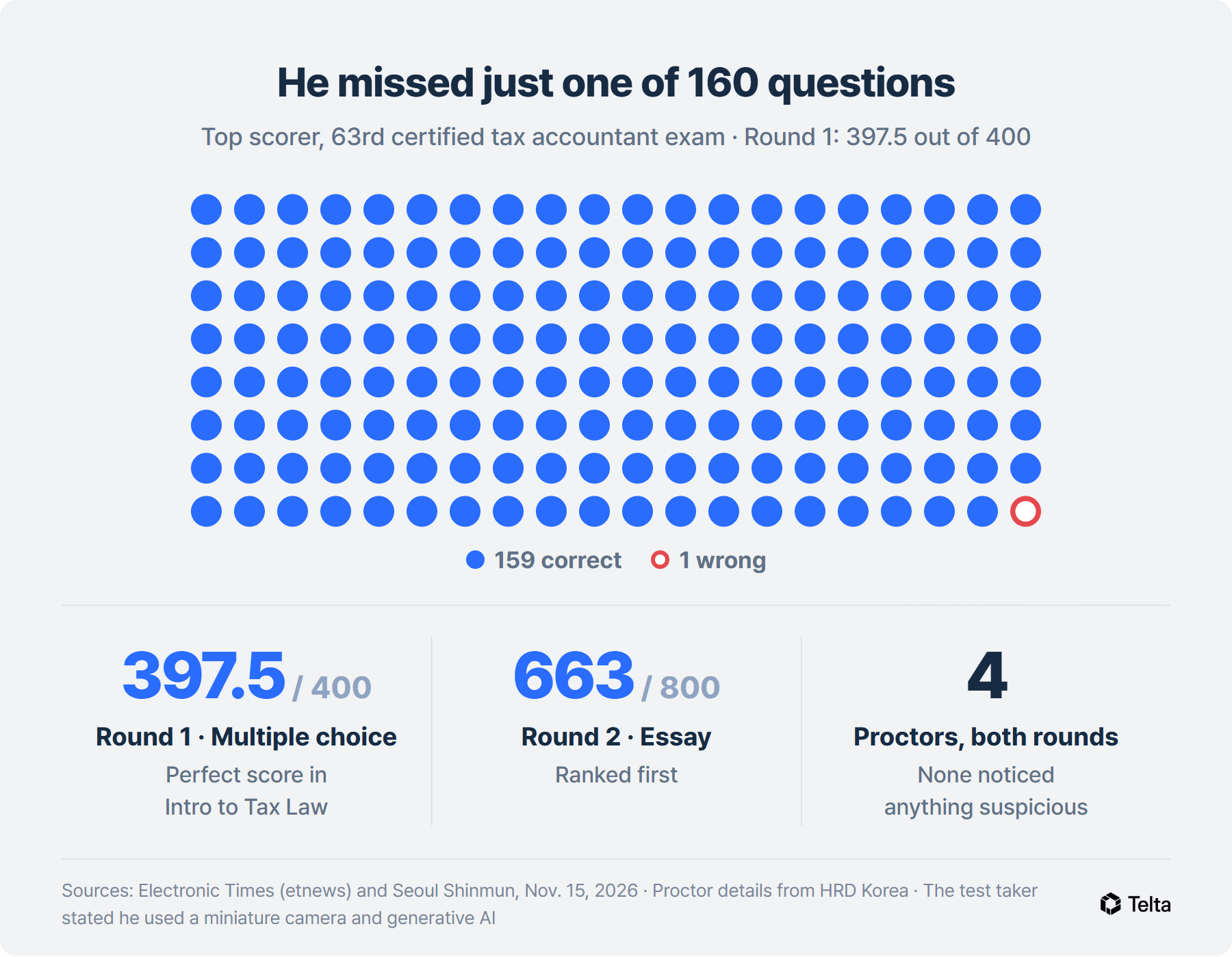
397.5 out of 400. The top scorer on Korea’s 63rd certified tax accountant exam has confessed that, seated right in front of the proctor, he photographed the questions with a miniature camera and sent them to a generative AI tool. This year, AI-assisted cheating spread to language tests, national licensing exams, Korea’s law school admission test (LEET), and university essay exams. When a test asks only for the right answer, corporate hiring and internal assessments can’t avoid the same question: what does this score actually prove?
A 397.5, Scored Right Under the Proctor’s Nose
The top scorer’s results made news the moment they were announced. On the first-round exam in April, he scored 397.5 out of 400. He missed one of 160 questions across four subjects and earned a perfect score in Introduction to Tax Law, a subject where the average was 30.18. On the essay-based second round in July, he placed first again with 663 out of 800.[1]

At first, he flatly denied allegations that he had worn AI glasses. Then, on November 15, he admitted to cheating in a YouTube video released by his lawyer and turned himself in to the Seoul Metropolitan Police Agency the same day with a written confession. He said he had photographed the questions with a miniature camera, sent them to a generative AI tool, and checked the answers on a smartphone, and that he used the same method in both rounds.[1][2]
In the first round, he sat in the second row in front of the proctor’s desk; in the second round, front row, center. Each room had two proctors. HRD Korea (Human Resources Development Service of Korea), which administers the exam, said none of the four proctors across the two rounds noticed anything suspicious.[1][2]
On the day his confession was filed, Cheong Wa Dae (the Office of the President) held an emergency meeting and decided to investigate every suspected case of AI-assisted cheating across all national licensing exams.[3]

AI Cheating Spread to Language, Licensing, Admissions, and University Exams
The tax exam was not an isolated case. The incidents reported in the press this year alone span language tests, national licensing exams, financial certifications, the law school admission test, university midterms, and college admission essay exams.
In April, smart glasses were caught at a TEPS (a Korean English proficiency test) testing site, and in the first half of the year a business school midterm at Hongik University produced the first confirmed case of smart-glasses cheating on a midterm at a Seoul university.[4][5] In May and June, three test takers were caught one after another on regular TOEIC exams.[6] A man in his 40s caught in May on the fire protection systems engineer exam in Gwangju was summarily indicted in June for violating the National Technical Qualifications Act, the first AI-glasses cheating case to go to court.[7] In July, a test taker found with smart glasses on the certified financial investment analyst exam was barred from every certification exam run by the Korea Financial Investment Association for five years.[8]
On July 19, during the LEET’s second session (logical reasoning), a proctor caught a test taker in their 20s wearing smart glasses, the first such case since the LEET was introduced in 2008. In August, the Korean Association of Law Schools voted to cancel the score and bar the test taker for four years, and police opened an investigation on charges including obstruction of business.[9] In October, at early-admission essay exams at the University of Seoul and Yonsei University, test takers were caught wearing ordinary glasses through the pre-exam check, then switching to smart glasses once the exam began.[4]
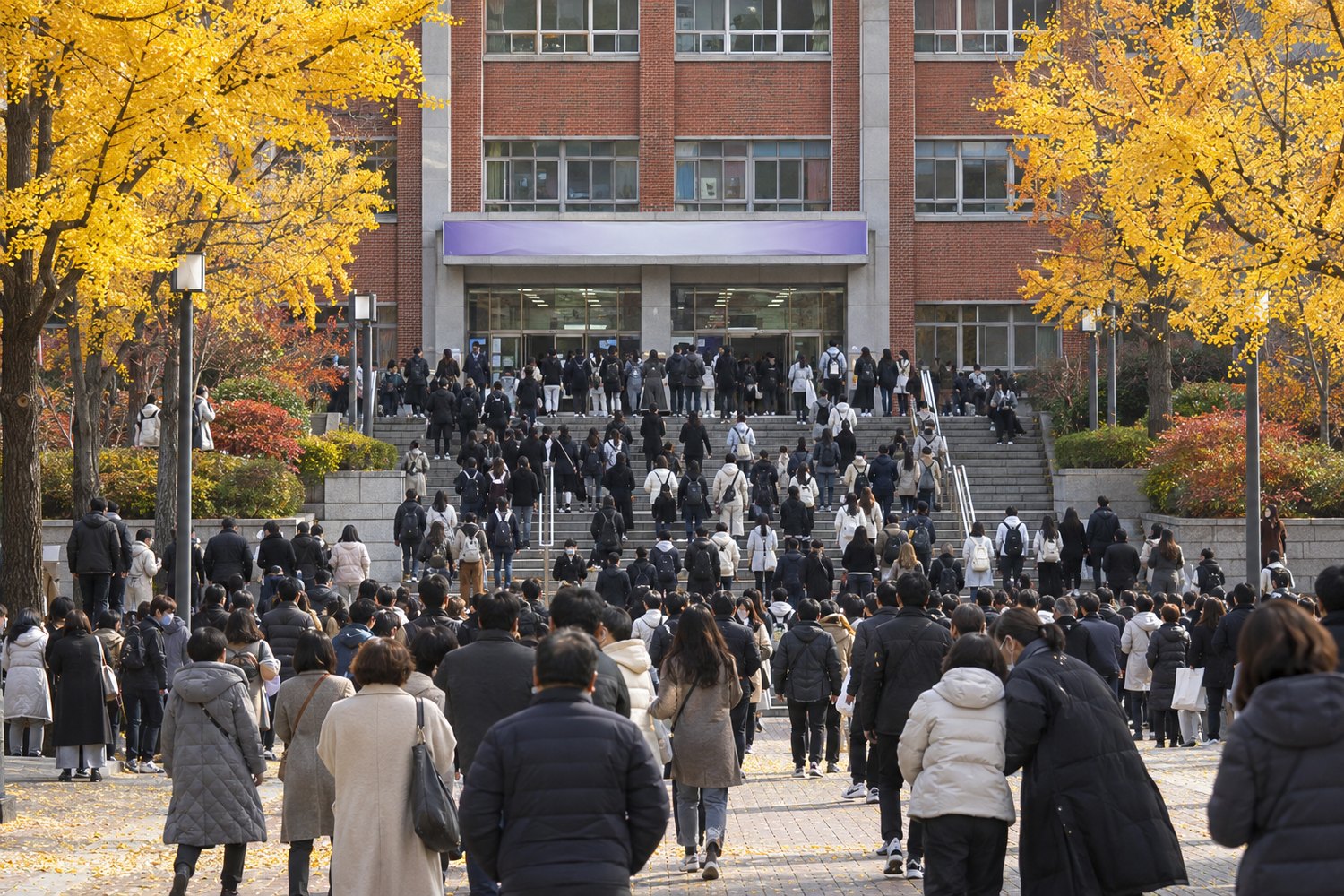
The cases kept coming on national licensing exams, too. In materials submitted for the October 23 parliamentary audit, HRD Korea reported five cases of smart-glasses cheating this year at written exam sites for national technical qualifications, including the fire protection systems engineer, information processing engineer, electrical industrial engineer, and gas craftsman exams.[10] Another test taker was caught at the gas engineer practical exam on October 25, bringing this year’s total on national technical qualification exams to six.[11]
And these are only the cases that were caught. YTN, which reported the Hongik University case, noted that proctors who rely on what they can see will struggle to catch smart glasses, raising the possibility that the devices have been misused far more widely.[5]

Proctoring Is Tightening, but the Devices Keep Shrinking and Multiplying
Authorities have responded. The Ministry of Education sent Korea’s 16 provincial and metropolitan education offices a notice banning AI glasses from exam rooms, treating possession as cheating, and telling proctors to watch for test takers who keep touching the arms of their glasses.[6] In July, the Ministry of Personnel Management checked, for the first time, whether any candidate wearing glasses in the second round of the grade-5 civil service exam had smart glasses on.[8] Starting this year, Yonsei University has proctors try on test takers’ glasses themselves.[4] HRD Korea created a dedicated proctoring role, the “AI inspector,” to identify smart glasses. It deployed the first 221 inspectors at the gas engineer practical exam on October 25 and 106 at the licensed real estate agent exam on October 31.[11][13]
Yet every new measure exposed a new gap. The Yonsei essay-exam test taker passed the glasses check in ordinary glasses, then switched to smart glasses once the exam began. Checking glasses doesn’t close the gap, either: the tax exam’s top scorer didn’t use glasses at all, but a miniature camera and a smartphone.
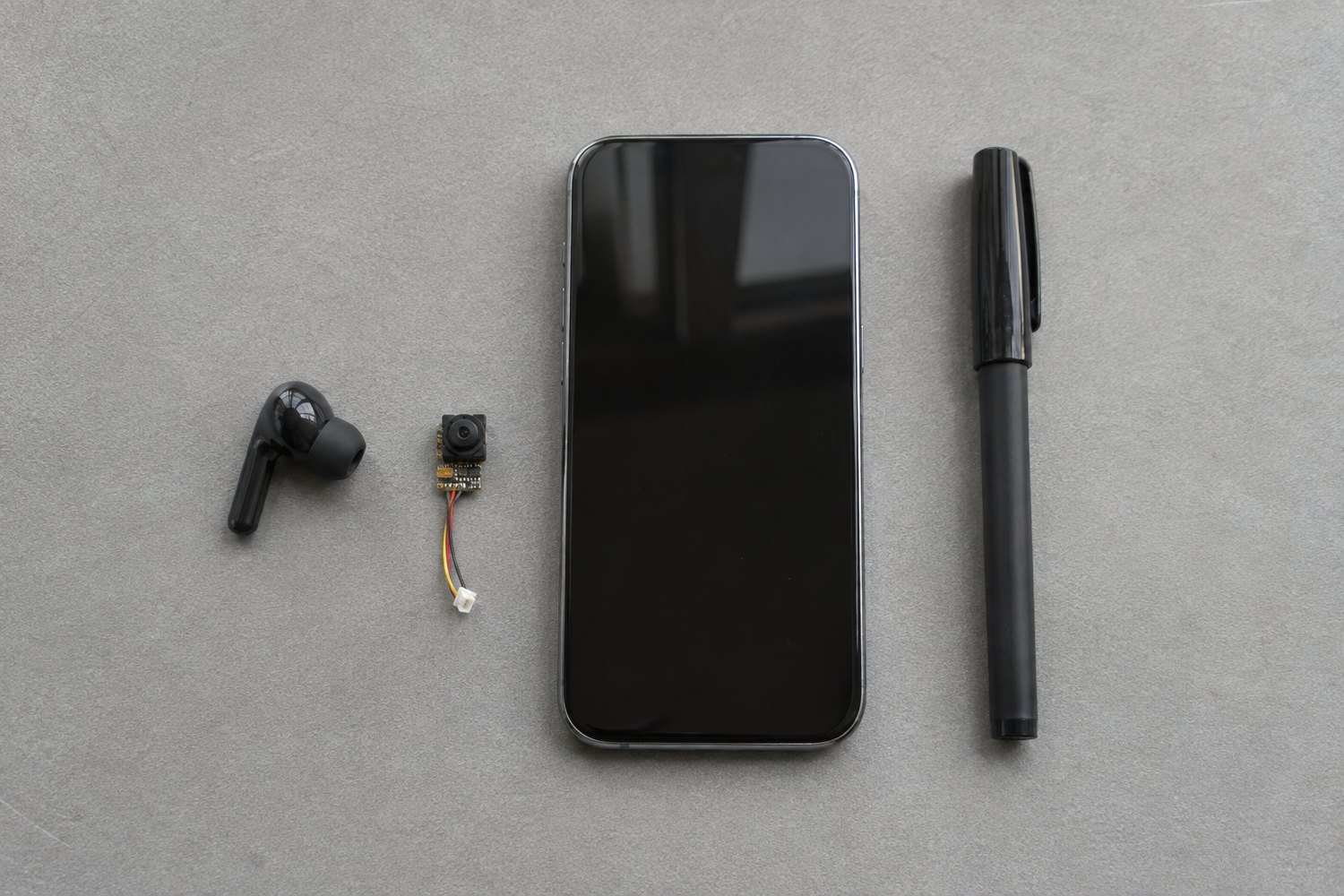
The devices keep getting smaller and more varied. Overseas, calculators with built-in generative AI and cameras are on sale, and miniature devices such as smart contact lenses are in development. Recently launched voice-based AI glasses have no display and weigh around 50 grams, so they are hard to tell apart from ordinary glasses by sight.[6]
Experts reach a similar conclusion. Lee Su-hwan, an associate research fellow at the Korean Educational Development Institute, said measures such as metal detectors and internet blocking have clear limits given how fast the technology is advancing.[6] The Korean Association of Law Schools, which administers the LEET, likewise said that even with checks of personal belongings, smart glasses smuggled into the room are, in practice, hard to block completely.[9]

Questions With One Right Answer Are the Easiest for AI
There’s a reason the cheating is spreading. Most exam questions have a predetermined right answer and test whether you can find it within a time limit. Now that a photo of a question can bring back an answer in seconds, these have become the easiest questions for AI.
The YouTube channel Techmong took a mock CSAT (Korea’s college entrance exam) math test while wearing AI glasses and finished in 18 minutes, missing just one question for a score of 96 and the top grade. The test taker caught on the Gwangju fire protection systems engineer exam reportedly told investigators he had developed an AI app that worked with the glasses and wanted to check whether the answers came up properly.[7] The 397.5 on the tax exam’s first round was also a multiple-choice score.
On a test that scores only the answer, the AI’s answer becomes the score. However tightly an exam is proctored, the temptation won’t go away as long as the test asks only for the right answer. Even essay questions, like those in the tax exam’s second round, can be answered by AI when there is a model answer. What makes the difference is less the question format than whether the evaluator follows up on the spot and asks why the candidate made that call.
Aptitude Tests and Other Test-Style Assessments Share the Same Structure
This is where HR leaders should pay attention. Most of the cases above came from exams with ID checks, proctors, device bans, and penalties for cheating. Even so, the cheating was hard to stop.
In corporate hiring and internal assessment, the question gets bigger. Many test-style assessments, including aptitude and personality tests, coding tests, and the completion tests employees take after training, ask people to pick the right answer. When they are taken online, there is often no proctor or only remote proctoring, which makes it even harder to tell a score earned alone from one earned with AI’s help.

By contrast, interviews that keep probing the reasoning behind a candidate’s judgment, and assessments that look at the decision process rather than the right answer, hold up comparatively well.
Companies are already moving. SK hynix, the memory chipmaker in Korea’s SK Group, announced that starting in August 2026 it would drop the personal statement stage and 20- to 30-minute short interviews from its rolling entry-level hiring and introduce a half-day in-depth interview instead.[12] In place of documents and short interviews, it chose an assessment setting that examines candidates longer and in more depth.
Tighter proctoring is necessary, but not sufficient, especially for tests that ask only for the right answer. The question to ask now is less “How do we stop cheating?” than “What does this score really prove about our candidates and employees?”
Interestingly, the same AI can also work for the evaluator: asking every candidate questions against the same criteria, recording every answer, and organizing the reasoning behind each judgment. The technology that became a tool for cheating can also become a tool for evaluating people more precisely.
Even if cheating can be stopped, a question remains. Part 2 looks at a journalist who answered 15 of 16 comprehension questions correctly yet placed third out of four on a hands-on AI skills assessment, and at which selection tool best predicted job performance after hiring.
References
- Electronic Times (etnews) · Nov. 15, 2026 · Report on the tax accountant exam’s top scorer admitting to cheating and turning himself in: first- and second-round scores, the allegations and his admission, the devices used, and HRD Korea’s statement. (in Korean)
- Seoul Shinmun · Nov. 15, 2026 · Tax accountant exam’s top scorer in “AI cheating” case turns himself in; case assigned to the police’s Metropolitan Investigation Unit. Seating and proctor assignments. (in Korean)
- Cheong Wa Dae (Office of the President) · Nov. 15, 2026 · Press release on the emergency meeting on AI-assisted exam cheating. (in Korean)
- Weekly Khan · Oct. 13, 2026 · Smart glasses caught at Yonsei University and University of Seoul essay exams; the TEPS case. (in Korean)
- YTN · Nov. 9, 2026 · Ordinary on the outside, AI on the inside: “smart glasses” and the Hongik University midterm case. (in Korean)
- Segye Ilbo · Aug. 2, 2026 · AI-glasses cheating and the Ministry of Education’s response: TOEIC cases, the ministry’s notice, and the limits of spotting devices. (in Korean)
- Seoul Shinmun · July 13, 2026 · Man in his 40s caught taking a national licensing exam in “AI glasses”: the first summary indictment and an AI-glasses mock exam experiment. (in Korean)
- Bizhankook · Sept. 4, 2026 · The regulatory gap on AI glasses: the financial investment analyst sanction and glasses checks on the grade-5 civil service exam. (in Korean)
- Seoul Shinmun · Oct. 14, 2026 · “AI glasses” caught on the LEET, too: four-year ban and police investigation. (in Korean)
- SBS Biz · Oct. 23, 2026 · Five cases of “AI glasses” cheating at exam sites: what is the plan with 470,000 test takers ahead? (in Korean)
- Newsis · Nov. 15, 2026 · Cheating caught at the gas engineer practical exam on the AI inspectors’ first day. (in Korean)
- Telta Blog · Aug. 6, 2026 · SK hynix Moves to Half-Day Interviews: Why Interviews Are Getting Tougher.
- Bizwatch · Nov. 16, 2026 · Exams breached by AI: even at the licensed real estate agent exam, the largest of all, the response was “just for show.” AI inspector deployment numbers. (in Korean)
Related Articles