.svg)
AI-Era Talent Strategy: Filling the Skills Data Gap in Your HCM and HRIS


According to a global Deloitte survey, many executives say the shift to a skills-based organization is important. Yet only around 10% to 20% said they are effectively identifying their workforce’s skills and using them in workforce decisions. Traditional HR data such as performance ratings, tenure, and training completion has piled up, but in many organizations, skills data that can be put to use right away simply does not exist yet.
Traditional HCM and HRIS platforms were designed mainly around the frameworks of jobs and positions, which makes it hard to build flexible skills data. This article introduces three strategies for effectively building the skills data your organization is missing.
💡 Key Takeaways
- Traditional organizations manage talent using proxy metrics such as performance ratings, tenure, and training completion.
- Global leaders are already moving quickly to put skills-based HR into practice.
- Telta’s competency assessment is the fastest way to fill your existing systems with skills data.
The Data Your HCM and HRIS Must Capture Next: Skills
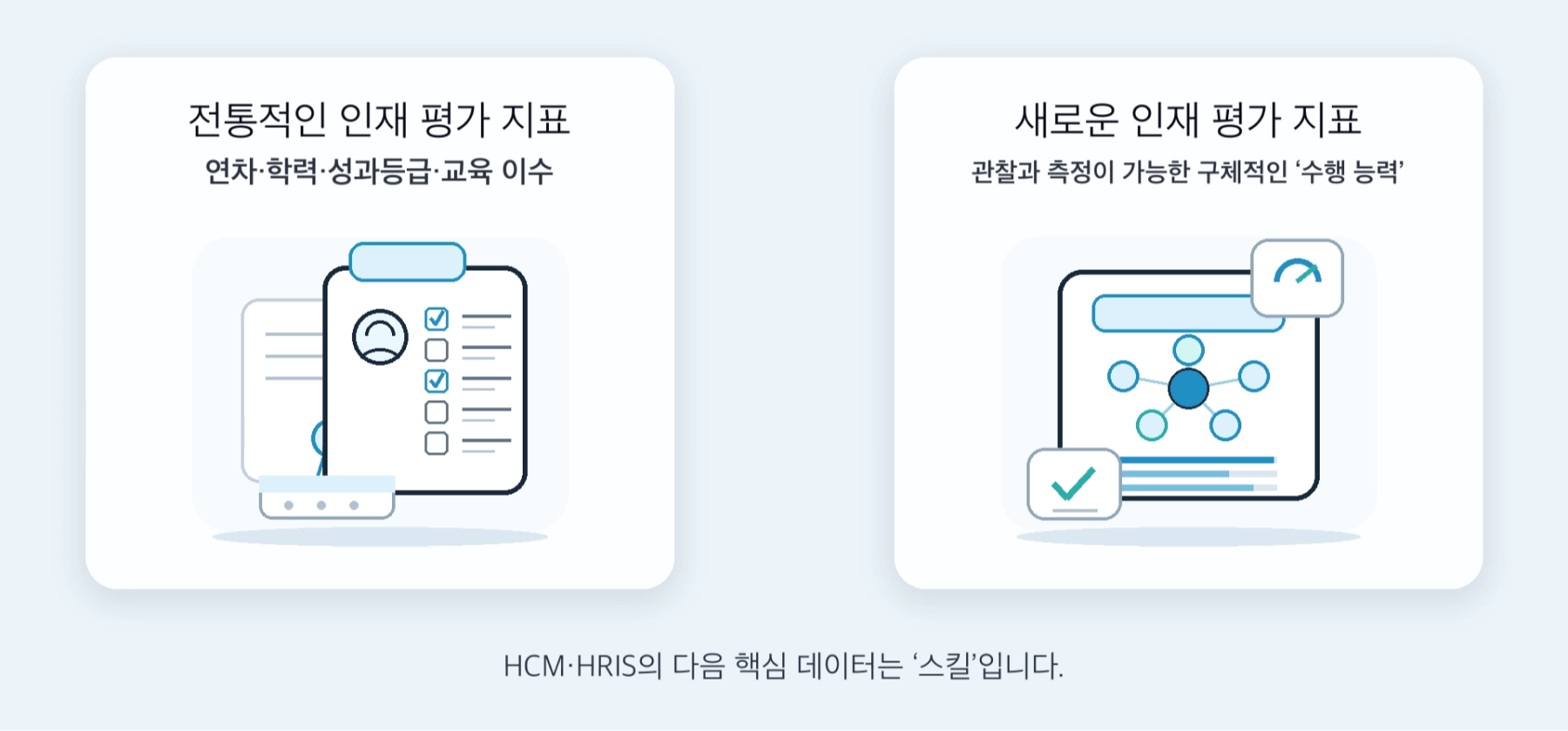
Most organizations that manage talent in an HCM or HRIS have relied on metrics that estimate people’s capabilities indirectly, such as KPIs and OKRs, performance reviews, tenure, and training completion. But this data alone makes it hard to judge “what this person can actually do on the job.”
Just as jobs and job levels are being reshaped in the AI era, the basis for evaluating talent has started to shift from competencies to skills. To build a skills taxonomy, organizations now need to define the competencies each role requires, design assessment items, and validate them.
This work, however, does not wrap up in a few weeks. It takes considerable time, expertise, and money. Unless leadership makes it a clear priority, it can be hard for HR to drive it alone.
Without defined skills data, the work keeps changing while the organization still makes promotion and placement decisions based on traditional proxies such as tenure and education.
📊 Data Insights
- According to Deloitte’s research on skills-based organizations, skills-based organizations are 79% more likely than others to deliver a positive workforce experience and 63% more likely to achieve results.
- The WEF Future of Jobs Report 2025 projects that 39% of workers’ core skills will change or become outdated between 2025 and 2030, and it names skill gaps as the biggest barrier to business transformation.
The AI-Era Talent Strategy Chosen by Global Leaders Like IBM and Unilever
As generative AI spreads, global companies are rapidly shifting talent management from a job-centered to a skill-centered model. Companies like IBM, Unilever, and BMO now hire based on skills rather than job descriptions, and they use skills to redeploy internal talent and design training programs.
Once skills data is in place, you can answer questions like “Where are the skill gaps in our critical roles?” and “Who is the right fit for this new project?” with data instead of gut feel. People analytics, fair promotion criteria, and measuring the return on training investments all depend on having this skills data first. The challenge is how to get it.
Related Reading
- A 4-Step Guide to Becoming a Skills-Based Organization
- What Is People Analytics? Why HR Data Matters More in the AI Era
Skills Design Looks Daunting. With Telta, You Can Start Right Away
With Telta’s competency assessment, you can turn your people’s skill levels into data through assessment, without designing skill standards from scratch. Talent assessment criteria are already built on more than 600,000 job data points collected from the global Top 500 companies, so you can introduce an assessment and evaluation system immediately without building a Skills Taxonomy from the ground up.
For example, Telta designed a skills framework for the marketing and CRM roles of a major insurer, based on data from global insurers, and carried it through to assessment and training. The result was a structure in which competency definitions, assessment, and training all follow a single standard.
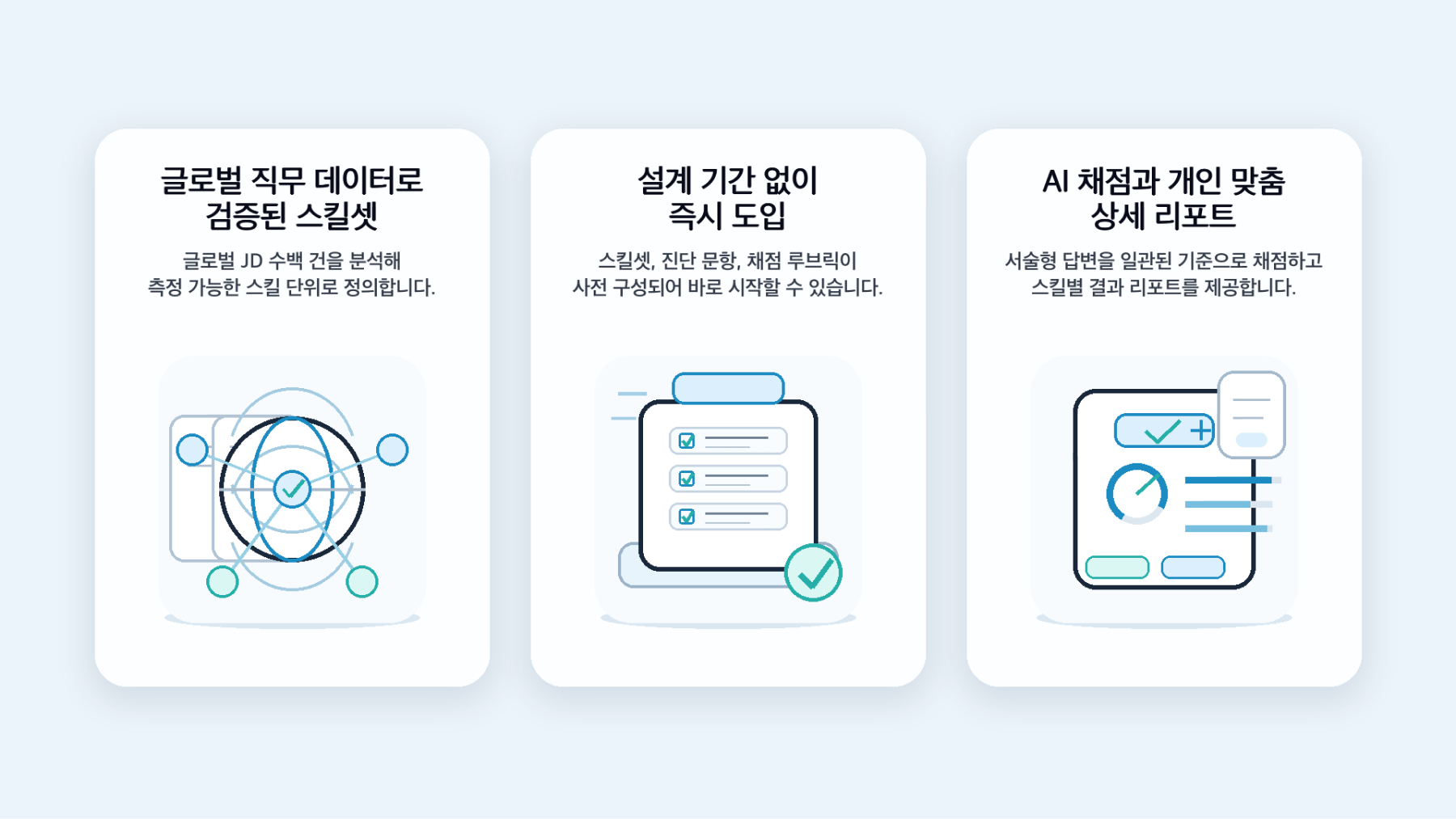
Assessment results come as structured reports you can use right away in HR decisions on hiring, promotion, training, and placement. Quickly fill the skills data gap in your HCM or HRIS and connect it to your existing HR data, and your system becomes more than a record-keeping tool: it becomes the standard for evaluating talent in the AI era. Make the shift to competency data-driven evaluation with Telta.
Related Articles
.webp)
.png)