.svg)
The Key to Executing Your 2026 Strategy: Securing Critical Skills


In December 2025, companies are approaching their 2026 business plans very differently than in past years. Growth used to mean adding headcount. This year, amid belt-tightening to brace for business uncertainty, companies are looking to grow without adding people, relying on AI instead.
Many leadership teams are planning on the premise that “if we work more efficiently, we can hit bigger targets with the people we have.” But that is arithmetic on a spreadsheet, and it says nothing about whether the organization is actually ready. This is where HR faces its central challenge: no one has verified whether the frontline can back up leadership’s optimistic assumptions with real capability and results.
1. The Gap Between Strategy and Execution Capability
Many companies built their 2026 workforce plans on a basic assumption: digital tools will raise productivity. But adopting a tool does not guarantee results.
McKinsey and many other global studies point to a mismatch between strategy and capabilities as a leading cause of strategic failure. Most companies set strategy without thinking hard about how they will secure the specific competencies or skills it requires, and they hit bottlenecks when it is time to execute. Just as in the digital transformation (DX) era, there is a real risk that the same mistake will repeat now that AI transformation (AX) is the agenda.
What matters, then, is not adopting tools for their own sake. It is working out exactly which skills your organization needs to reach its strategic goals, with a concrete plan to secure them.
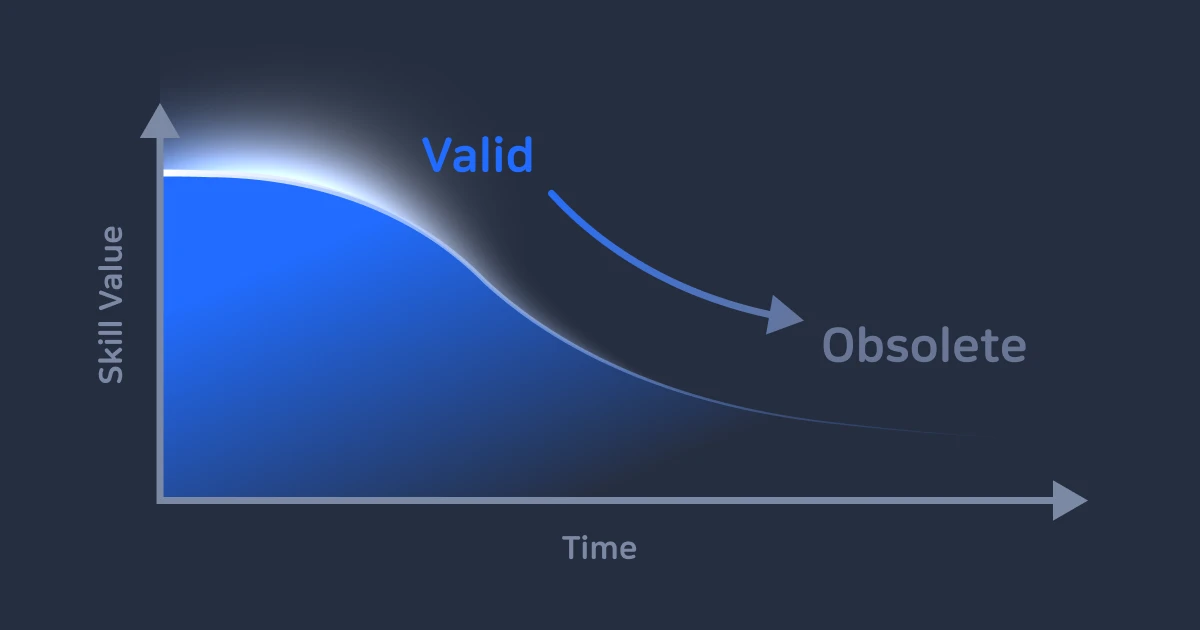
2. A Bigger Problem Than the Capability Gap: Skills Are Expiring Faster
The gap between strategy and capability has been talked about for years. As 2026 approaches, however, it is back as a real risk for two reasons. Skills now have a shorter shelf life, and despite companies’ efforts to secure the capabilities they need, closing the gap between strategy and execution capability remains a major challenge in workforce planning.
According to Gartner’s 2025 research, strategic workforce planning ranked as a top HR priority. Even so, many companies still see the gap between strategy and execution capability as their biggest challenge.
Strategic workforce planning has become increasingly complex as ongoing business and technology disruptions are leading CHROs to rethink their approach to the future of work. For many, this evolving landscape raises more questions than answers. A significant challenge for CHROs is the lack of adequate internal data, as 23% of CHROs cite this as their greatest obstacle in identifying the capabilities needed for the future.
(Top 3 Priorities for CHROs in 2025, Gartner)
What we are seeing signals the end of an era in which hiring the right people and putting them in place guaranteed results for a predictable stretch of time. The value of the capabilities we believe we have secured is being reassessed continuously, right now, as technology and markets change.
3. Building Skills Data Around Strategic Priorities
To manage the risk in 2026 business plans, HR needs to go beyond workforce planning from a financial perspective and verify, from a strategic perspective, whether the organization actually has the capabilities it needs. That calls for focusing on the critical skills essential to executing the strategy rather than trying to cover everything. HR’s role needs to be redefined as a partner that identifies these skills together with key talent, subject-matter experts, and leaders.
(1) Define and Manage Capabilities at the Skill Level
To support a company’s 2026 strategic direction effectively (for example, process automation or global sales expansion), break existing competencies down into skills, which are measurable units, and select the critical skills from among them.
Why skills? In the high-growth era, experience and intuition were enough to guarantee results. In the AX era, where technology and markets change at breakneck speed, jobs and competencies cannot keep pace with the business. Jobs and competencies are static and broad, while the skills the business needs are fluid and granular. To shorten the lag between strategy and execution, managing at a finer, skill-level granularity is essential.
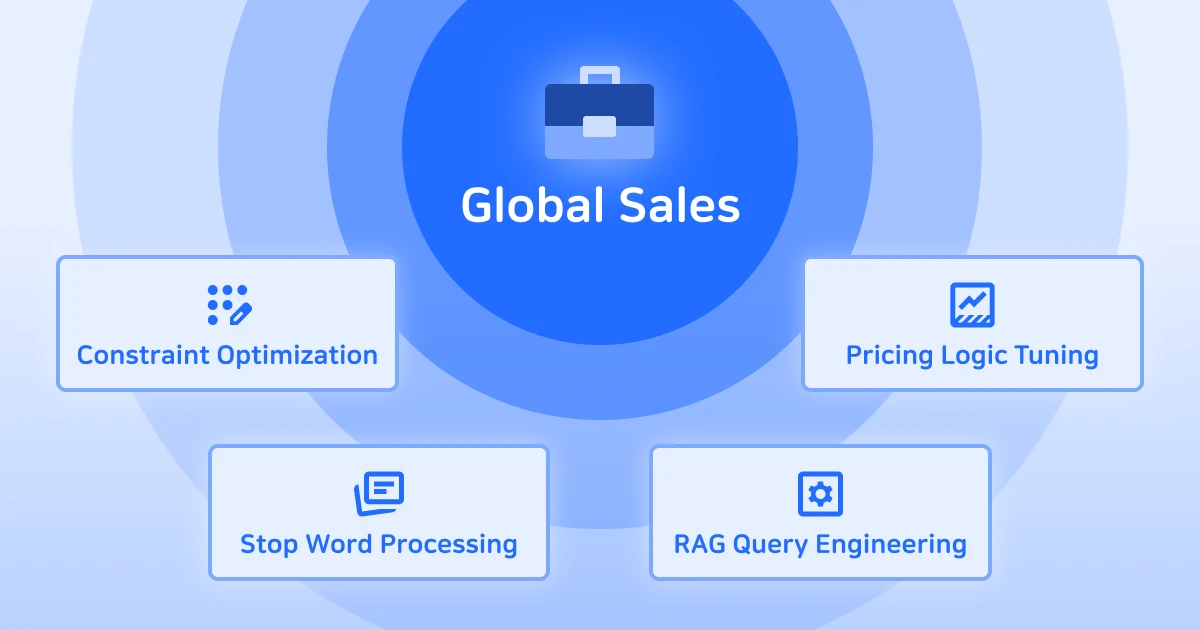
For example, global sales can be broken down below the competency level and redefined in terms of data and AI skills that tie directly to profitability:
- [Constraint Optimization] The ability to narrow down optimal logistics and production routes by clearly specifying hard constraints such as cost limits and delivery dates
- [Pricing Logic Tuning] The ability to fine-tune simulation parameters such as logistics cost weights and tariff rates to calculate the optimal target margin
- [Stop Word Processing for Sentiment Analysis] The data preprocessing ability to register and manage meaningless conjunctions and homonyms as excluded words to improve analysis accuracy
- [RAG Query Engineering for Contracts] The prompt-writing ability to enter queries that include specific comparison criteria, such as company guidelines, when using AI to review contracts
Telta Customer Story
Korean Manufacturer Case: Assessing Overseas Sales Staff and Future Leaders
(2) Assess Skill Gaps Against Strategic Goals
Next, check how much of each critical skill your organization actually has. This is not a general competency assessment. It is a purpose-driven assessment designed to identify the gap between the level and volume of skills needed to reach strategic goals and what you have today.
Rather than defining and assessing skills across the whole company, target strategically: assess the core divisions or new business units with the highest strategic importance first. That lets you focus more effectively on making the strategy executable. Set clear priorities around critical skills and use the results as the foundation for identifying and developing them.
(3) Give Employees a Vision for Growth
None of this is only about company productivity. For employees, it can be a chance to move past a vague fear of change and see a clear direction for growth that raises their own market value.
- Motivation through a clear direction for growth: The message employees should hear is not “the company is evaluating me” but “the company is clearly showing me the critical skills that will strengthen my career, and supporting me in building them.” In times of change, that is a powerful way to reassure people and drive engagement.
Beyond Hitting the Numbers to Confidence in Execution
The numbers in a business plan are not a guaranteed future. They are targets to be met. Plans for 2026, built on the premise of efficiency, demand more intensive use of critical skills than ever.
Be wary of the vague optimism that AI or technology will solve everything. Behind a plan that looks flawless on paper, ask and verify whether the critical skills needed to carry out the strategy are actually in place. That is the most valuable insight HR can offer leadership this December.
Related Reading
- Talent Intelligence: The Center of HR Strategy in a Low-Growth 2026
- Skills-Based HR Success Stories: Mastercard, Blizzard, and Sephora
Related Articles
.webp)

