.svg)
Skills-Based HR Success Stories: Mastercard, Blizzard, and Sephora


Job titles like “developer,” “marketer,” or “product planner” no longer tell you enough about a person. People with the same title bring different skills to the job, and people with the same years of experience solve problems differently and have different potential to grow.
Skills-based HR stops lumping people together by job title or tenure. Instead, it designs hiring, development, placement, and rewards around what people can actually do on the job. The more distinctive an industry, such as financial services, gaming, or beauty and retail, the more it matters to define the competencies your own organization needs.
Mastercard, Blizzard, and Sephora have already changed how they run HR: they assess and deploy people based on competencies and develop the competencies they need. Drawing on these three cases, this article looks at how companies can design competency assessment standards that fit their own industry.
💡 Key Takeaways
- Skills-based HR manages talent based on what people can actually do on the job, not on job titles or tenure.
- Mastercard uses an AI-powered internal talent marketplace to connect employees’ skills with projects, mentoring, and learning opportunities.
- Blizzard’s Level Up U program trained people with adjacent skills to fill engineering roles.
- Sephora unified its global HR data in the People Trends app to make decisions more consistent.
- Telta’s competency assessment provides role-specific competency standards, assessment items, AI scoring, and reports that help you put skills-based HR into practice.
Why Skills-Based HR Has Become the Foundation of HR Strategy
Traditional job descriptions mostly describe a person’s responsibilities and past experience. Yet what actually drives performance is a set of finer-grained abilities that a single job title cannot capture: the problem-solving ability to define and work through problems, the adaptability to keep up with a fast-changing environment, and the digital literacy to put new tools like AI to work.
Among developers, one may excel at using AI tools, another at running legacy systems, and a third at framing problems and collaborating. Two people with five years of experience can bring very different skills to the table. Look only at job titles and tenure, and these differences stay hidden.
In large enterprises, the problem grows. When each department describes its standards for hiring, development, promotion, and rewards in a different language, talent management loses consistency. If hiring looks at problem-solving, training covers job knowledge, and promotion looks only at leadership, the organization ends up judging the same person in different ways.
Global Leaders Already Managing Talent by Skills
According to Mercer’s 2024/2025 Skills Snapshot Survey, global companies already apply skills across core areas of HR. More than 60% are actively using skills in career development, hiring, and performance management. Skills-based HR is no longer just a trend.
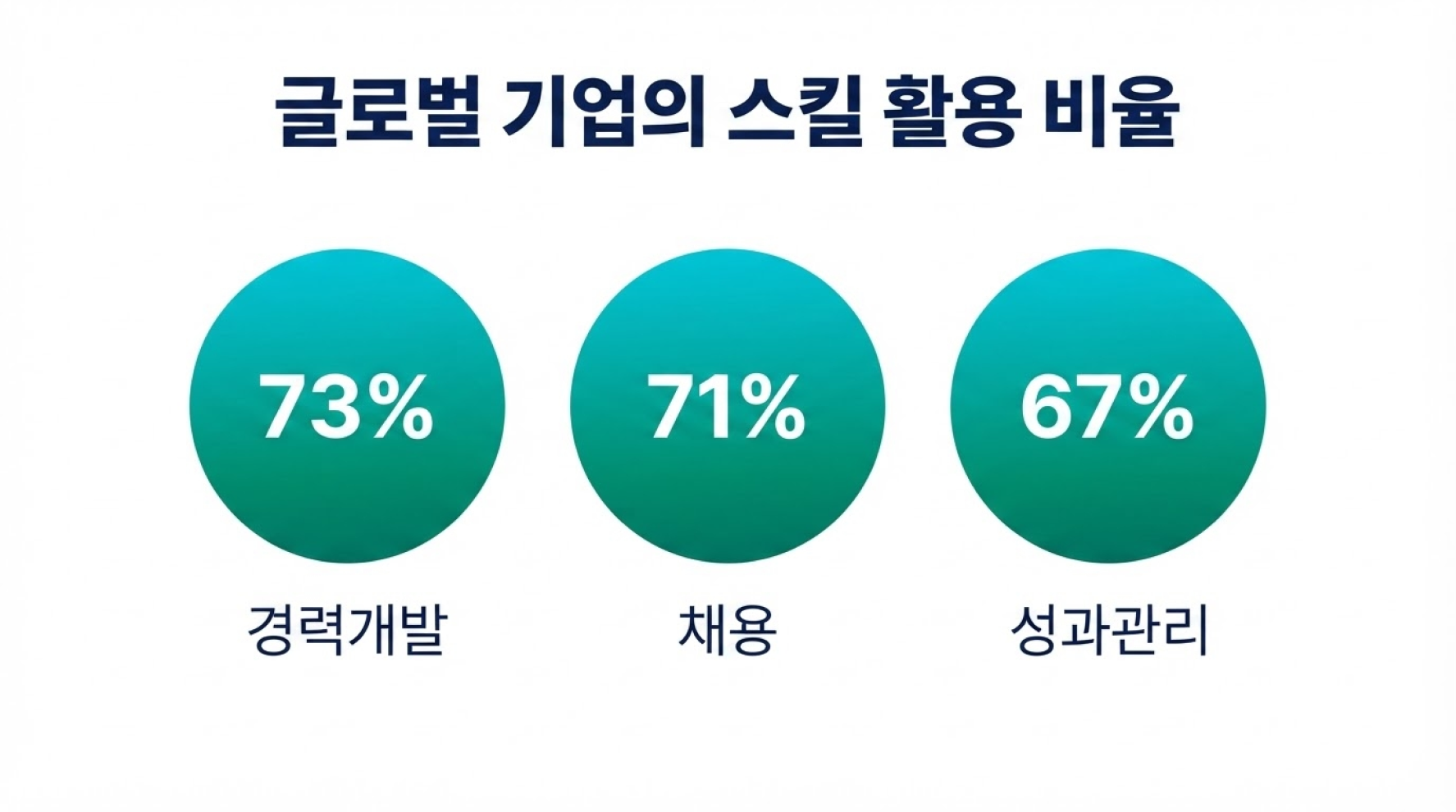
[Financial Services] When Required Competencies Shift Fast, Redeploy by Skills
In financial services, regulation, security, risk management, data, and digital transformation all matter at once. The competencies the business needs change quickly, and external hiring alone cannot supply every skill. That makes it essential to know which skills internal talent already has and to connect people with the projects and learning opportunities the business needs.
Case 1. Mastercard: An AI-Powered Skills Marketplace for Internal Mobility and Growth
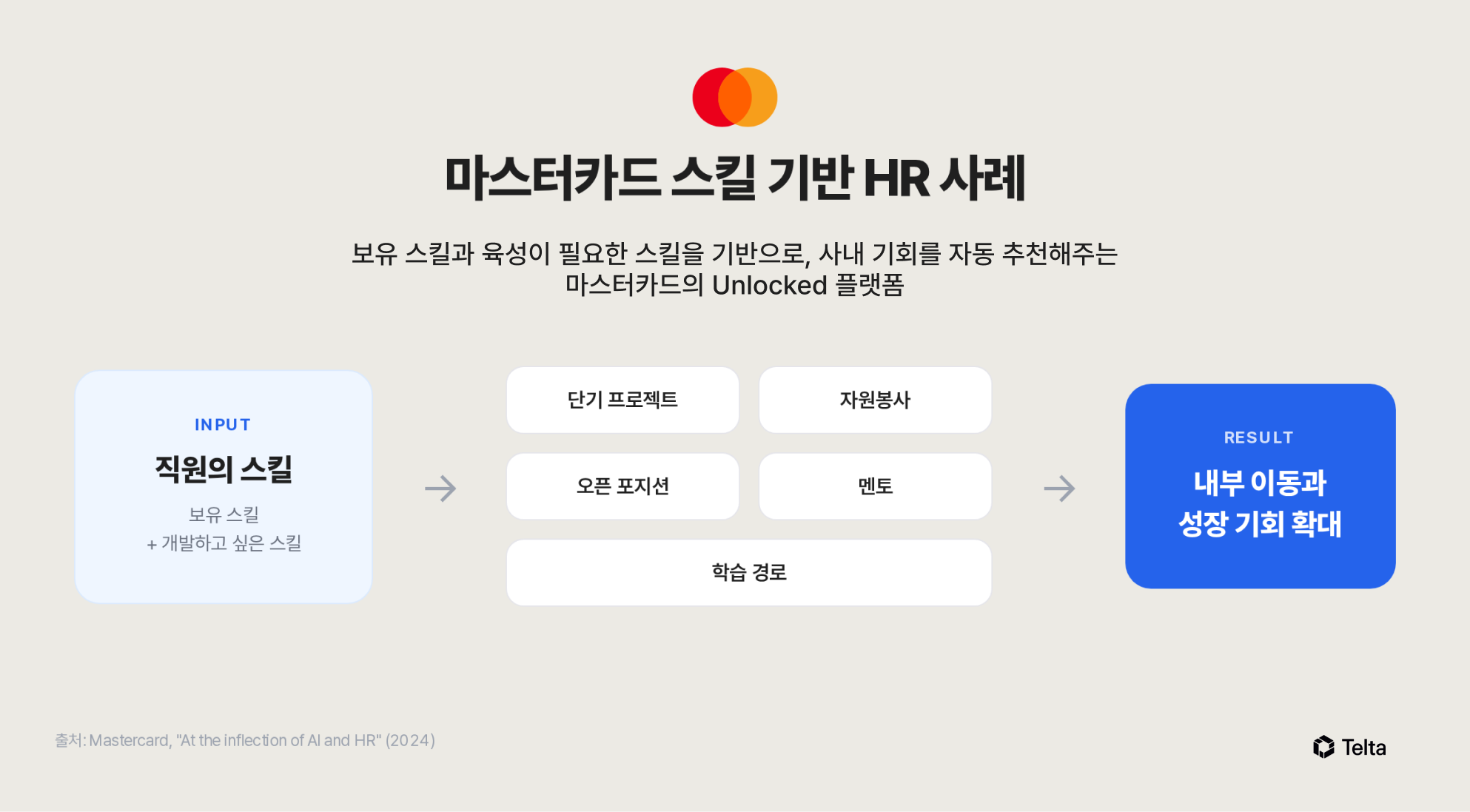
Mastercard runs Unlocked, an AI-powered internal talent marketplace. The platform recommends short-term projects, volunteer opportunities, open positions, mentors, and learning paths based on the skills employees have and the skills they want to build. According to Mastercard, 90% of employees use Unlocked, and one-third of those who took part in projects and mentoring went on to change roles or earn a promotion. As Mastercard’s experience shows, connecting people with opportunities on the basis of skills can open up internal mobility and growth.
👉 In financial services, where regulatory, security, data, and digital transformation capabilities are all needed at once, companies need a structure that first assesses the skills of internal talent and then connects people with the right projects and training.
[Gaming] When Talent Demand Swings, Look Closely at Adjacent Skills That Can Grow
Technology moves fast in gaming, and talent demand swings from project to project. Because development, art, game design, data, live operations, and community all have to work together, shortages in specific job families tend to recur.
Demand for engineers is especially high, but setting experience requirements too narrowly can mean missing candidates with real growth potential. Gaming companies need to ask not only “Can this person do it right now?” but also “How quickly can they learn?”
Case 2. Blizzard: Developing Adjacent Skills to Close the Engineering Talent Gap
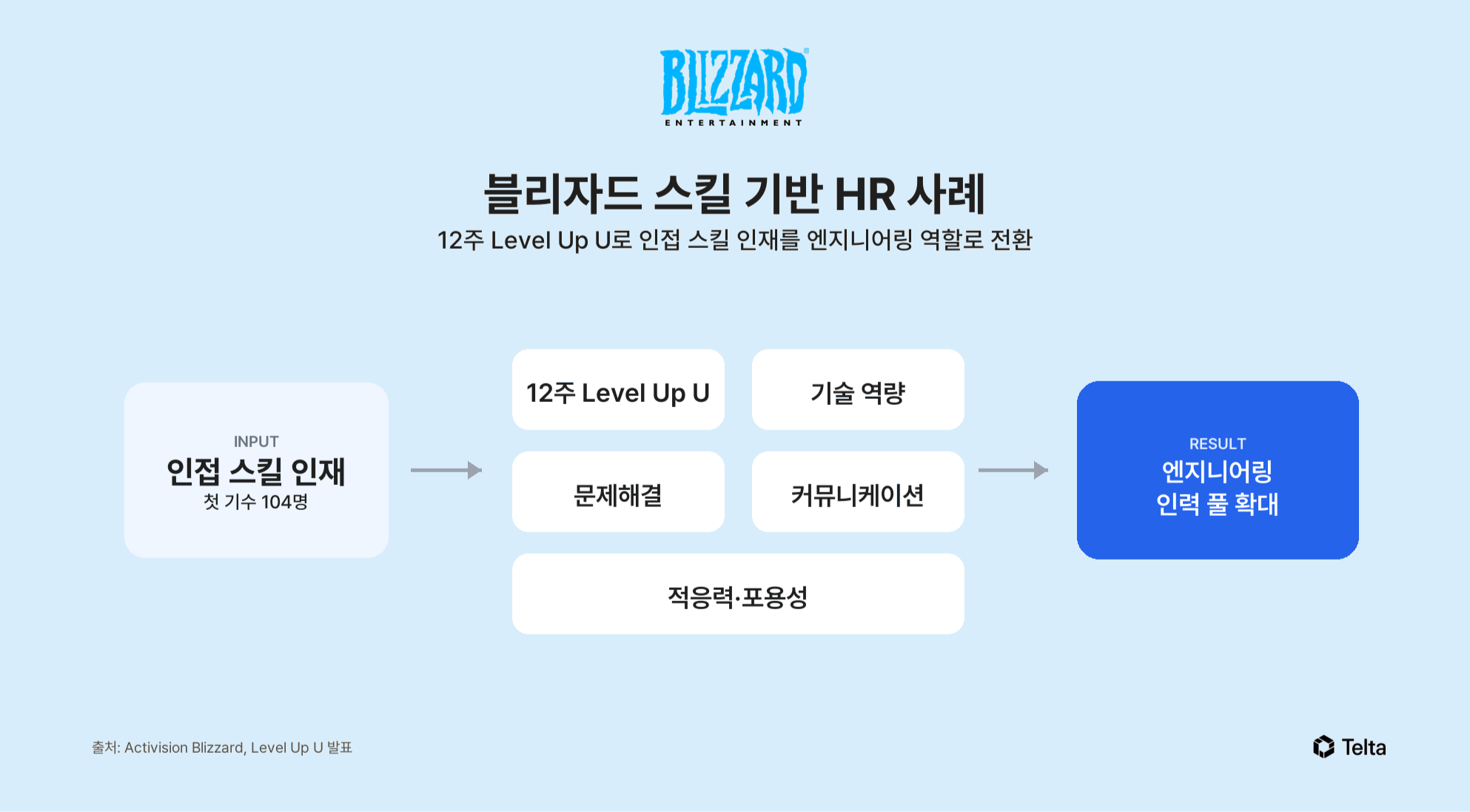
Through Level Up U, a 12-week in-house training program, Blizzard set out to move people from inside and outside the games industry into engineering roles. According to the official announcement, the first cohort included 104 external candidates and existing employees, drawn from fields as varied as medicine, finance, and aerospace.
Level Up U covered not only technical skills but also the capabilities team-based development requires, such as problem-solving, communication, adaptability, and inclusion. In other words, Blizzard did not limit its search to people with game development experience. It found and developed candidates based on a broader set of skills and their potential to grow.
👉 HR leaders at game studios can go beyond looking only for people who can do the job today and consider expanding their talent pool by distinguishing must-have skills from adjacent skills. Organizations facing recurring engineering shortages need a standard that separates the skills they must verify up front from those people can build through training, rather than narrowing experience requirements further.
[Beauty & Retail] Manage HR Data Scattered Across Regions and Teams with a Shared Skills Language
In beauty and retail, workforce practices often vary by country, region, store, and role. Frontline staff, store managers, headquarters teams, and digital commerce talent all work side by side, so when HR data is scattered, hiring, development, and evaluation standards can lose consistency.
Skills-based HR matters in this industry not just because it changes assessment items. Only when talent data managed differently across regions and teams is organized in a common language can a company tell who has which competencies and where they should be placed.
Case 3. Sephora: Unifying HR Data Around Skills for More Consistent Decisions
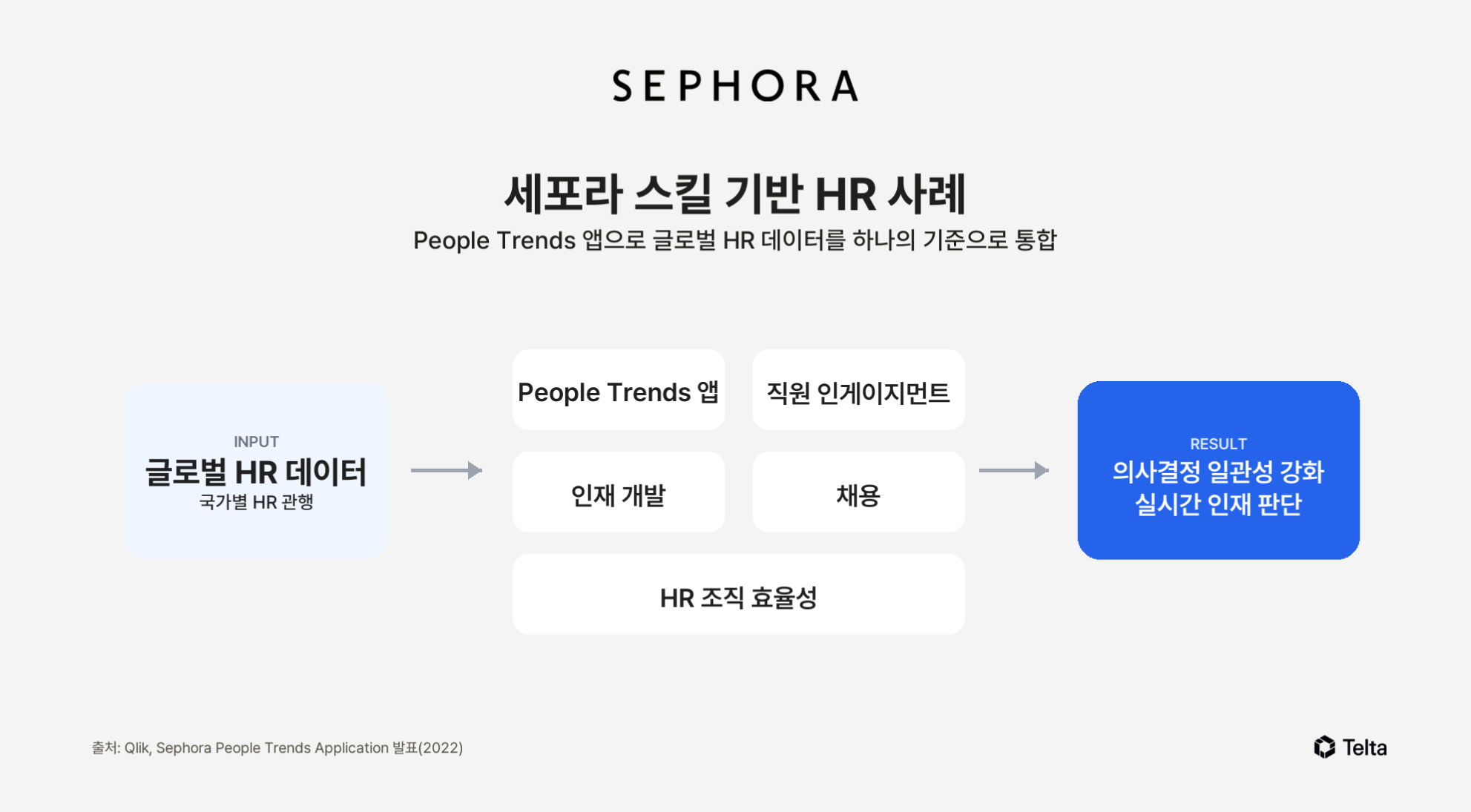
Through its People Trends app, Sephora unified its global HR data and enabled managers to make decisions based on real-time data. The app brings four areas into a single data source: employee engagement, talent development, recruiting, and HR operational efficiency.
As Sephora grew globally, it faced the challenge of integrating HR practices and data across countries. The People Trends app gave managers access to up-to-date HR data regardless of country or region, so they could make talent decisions against the same standards.
Skills-based HR does not end with building individual scorecards. It starts with organizing the talent data inside your organization in a common language and connecting that data to hiring, development, and placement decisions.
👉 For beauty and retail companies, following Sephora’s lead and connecting HR data scattered across regions and stores under a single standard can make talent development and hiring decisions more consistent.
Related Reading
- Skills-Based HR in Practice: Unilever, IBM, and BMO
- A 4-Step Guide to Becoming a Skills-Based Organization
Start Your Skills-Based HR Strategy Now with Telta’s Competency Assessment
The cases of these global leaders show what skills-based HR looks like when it works well. Bringing a skills-based HR strategy into your own organization, however, can be hard from the very first step, because defining role-specific competency standards from scratch and designing validated assessment items takes considerable time and expertise.
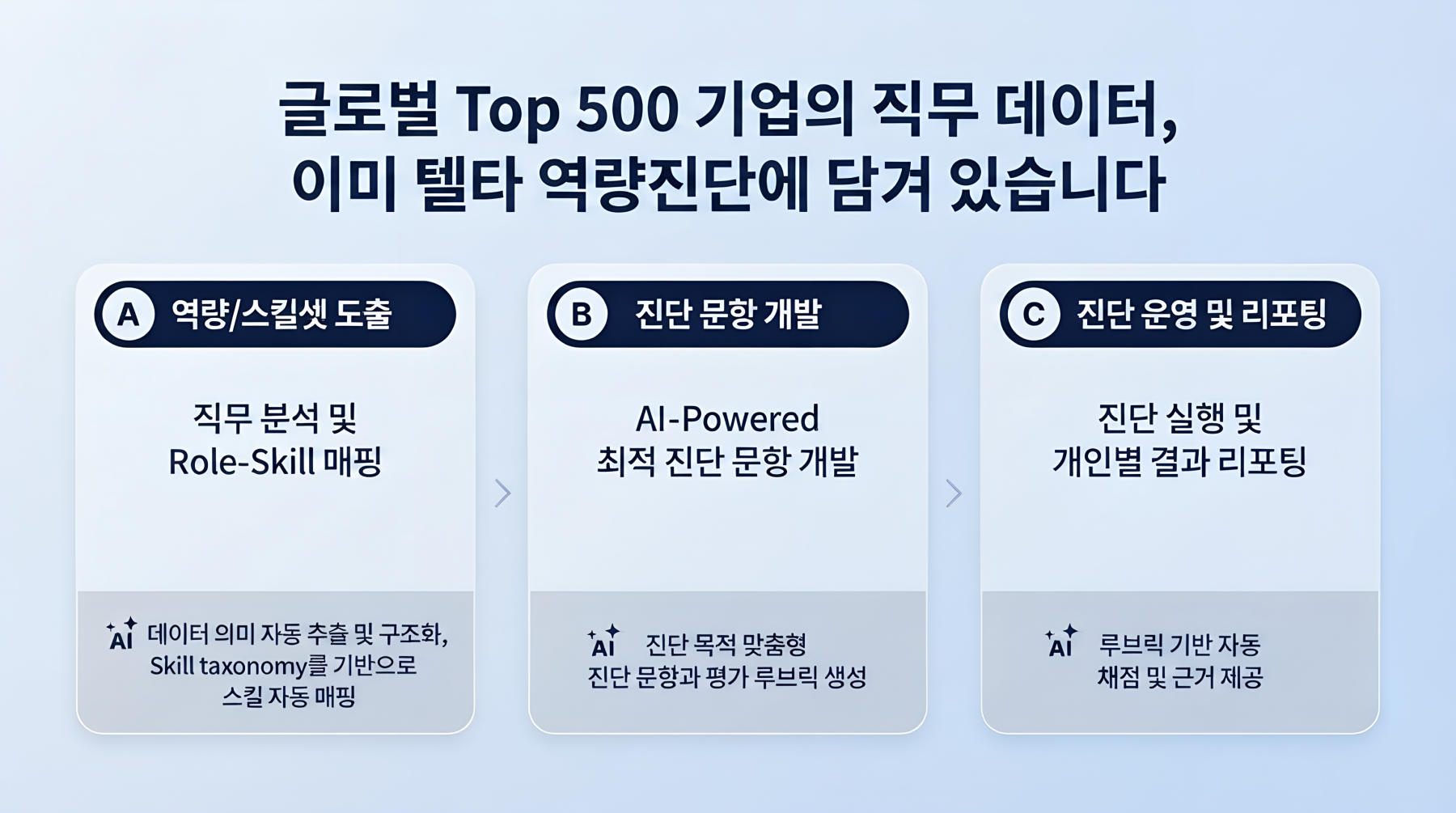
Telta’s competency assessment helps you launch a skills-based HR strategy right away. Built on more than 600,000 job data points collected from the global Top 500 companies, it comes with role-specific competency standards that point in the same direction leading companies reached after years of trial and error.
Assessment items are already defined for the roles and positions that matter most to growth, from B2B sales and marketing to service planning and management of overseas subsidiaries, so you can assess your people’s skills immediately without designing a competency framework from scratch.
In an AI era that changes by the day, past experience alone no longer gives you a clear view of talent. When you look through the lens of skills, hiring becomes more precise, development moves faster, and placement and rewards become more persuasive. The real question is not whether to adopt skills-based HR, but “how to measure and apply the standard consistently.” A clear standard gets you started faster.
Start with Telta, using a competency assessment matched to your HR goals and the people you need to assess.
Related Articles
.webp)
.png)