.svg)


For years, HR leaders have framed psychological safety largely in terms of interpersonal dynamics—whether employees feel their voices are heard and whether mistakes won’t be met with blame.
But as AI adoption accelerates and the shelf life of jobs continues to shrink to just two to three years, effective change management requires us to confront a deeper source of workplace anxiety. Today’s employees are less afraid of a manager’s critique than of a situation where their performance and value are assessed by opaque systems they don’t fully understand, operating like a black box.
A 2024 survey by Boston Consulting Group found that 49% of regular AI users worry their jobs could disappear. This anxiety, felt by nearly half the workforce, signals that psychological safety within organizations can no longer rely solely on human warmth.
Empathy and encouragement from leaders still remain crucial. However, in an era where data-driven performance management is becoming the norm and AI is shaping entire work processes, a leader’s personal efforts cannot fully offset how opaque the system feels. Psychological safety must now be redefined beyond good relationships, evolving into a new dimension of change management strategy that provides “a clear sense of predictability.”
Even the Most Empathetic Leaders Can’t Unlock the Black Box
What scares employees most isn’t the risk of failure, but the unknown process itself. It’s a black box: employees don’t know how their performance is assessed once AI is integrated into the workflow, or which skills are defined as core competencies in the new environment.

We often assume that a leader’s reassurance is enough to build psychological safety, even in the face of that black box. But recent data suggests otherwise. According to a 2024 study by Sari and Santoso, employees feel psychologically safe only when they perceive AI- and data-driven evaluations as fair.
This means empathy without system transparency rings hollow. If the rules of the game and the criteria for success are hidden, even the kindest leader cannot eliminate fear. Real safety comes from predictable fairness, not just a leader’s smile.
Ultimately, true change management doesn’t start with a leader’s reassurance. It begins when the system becomes visible and clear enough to show everyone what they need to do to thrive going forward.
Data-Driven Psychological Safety to Prevent Failure in Change Management
Data-driven management is frequently misunderstood as a tool for cold surveillance. Yet, paradoxically, in an era of VUCA, a robust data infrastructure can actually serve as a powerful safeguard for employees. To successfully drive organizational change, HR must build psychological safety through data across three critical dimensions.
Clear Evaluation Criteria: Engagement That Grows When the Rules are Understood
Nothing creates more stress for employees than being forced to play a game without a rulebook. In the age of AI, rather than vague messages to “just do your best,” HR must clearly communicate data-driven decision criteria, specifically, spelling out which skills matter most to the organization right now.
As HR thought leader Josh Bersin notes in his column Building A Skills-Based Organization, the transition to a skill-based organization requires greater transparency around opportunities. When data makes it clear which competencies are tied to specific rewards and opportunities, employees move from anxiety to deeper engagement in their work.
Data-Driven Fairness: Psychological Safety Built into the System
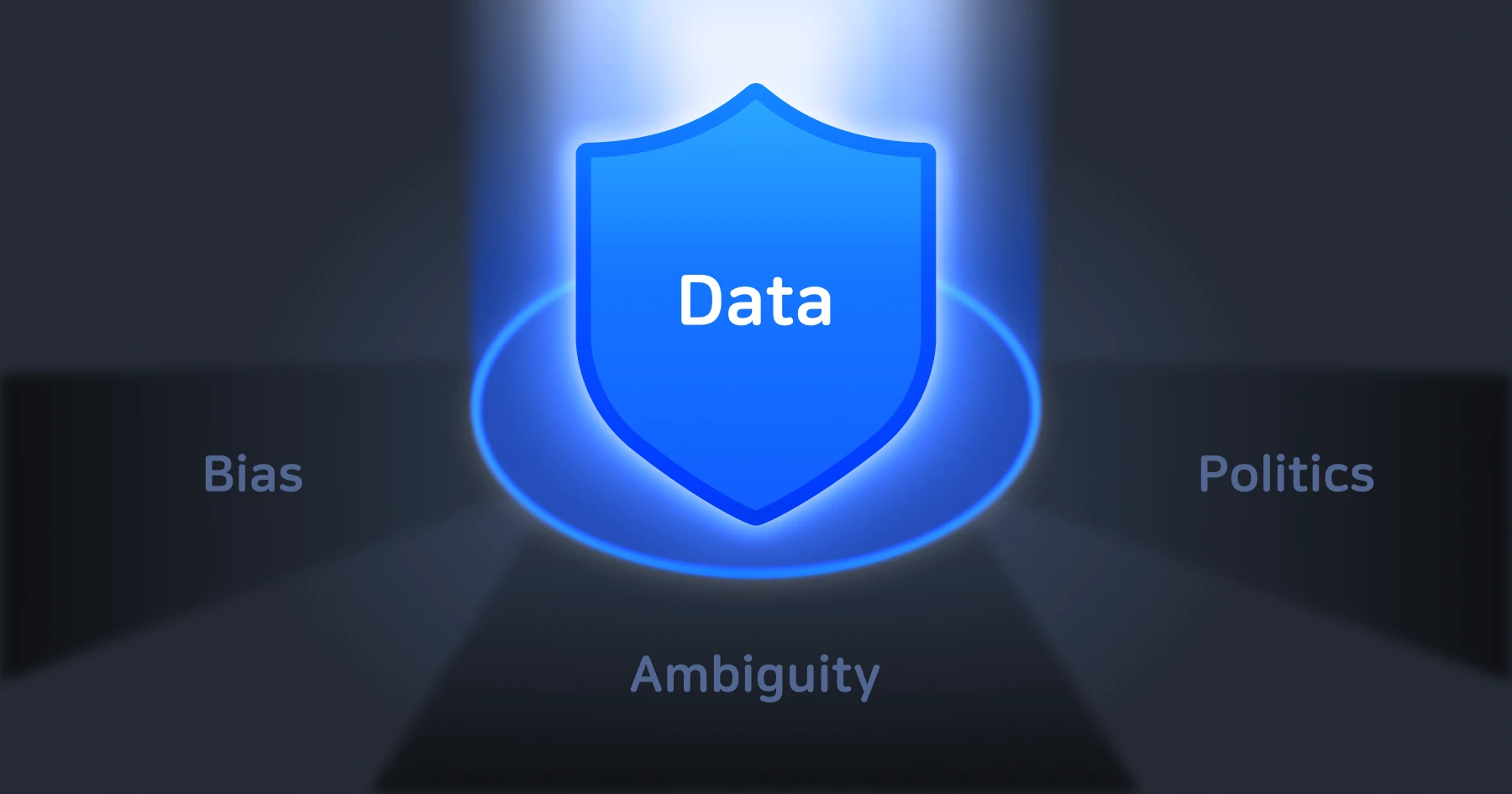
Data does not lie, but human intuition is often flawed. Especially during periods of rapid change, even the best leaders are susceptible to similarity bias, where they evaluate others based on their own past experiences. This is where objective data becomes necessary.
There is, of course, a prerequisite: the data and skill architecture itself must be designed fairly and accurately. This is because poorly designed data can introduce yet another layer of bias. However, when meticulously structured data and performance indicators are built into the system, employees gain confidence in the system, knowing their careers aren’t dictated by a manager’s subjectivity or office politics.
Even when an unfavorable outcome appears, if it’s grounded in data, it feels like actionable feedback, not personal criticism. That’s the essence of psychological safety provided by the system.
Career Control: Turning Anxiety into a Driving Force for Growth
Fear of change intensifies when people feel they have no control. In this environment, HR cannot rely on vague platitudes, but must objectively identify how an employee’s competencies compare with market demands—their skill gap—and outline a precise upskilling path to close that gap. A clear sense of where you stand and how to bridge those gaps. Simply put, giving employees greater control over their career trajectory is the most powerful safety net HR can offer.
HR: From Relationship Manager to Trust Architect
For years, we have poured resources into leadership training and communication programs to improve organizational culture. But now, the focus must shift to building a trustworthy infrastructure where data flows.
Psychological safety is not merely a state of comfort, but an environment where employees don’t have to constantly read the room. In that setting, energy once spent trying to gauge a manager’s mood due to ambiguous evaluation criteria, or fearing that one’s skills might become obsolete, can instead be directed toward the core of their work and growth.
This is precisely the true change management HR must now deliver through data in the AI era, and it lies at the heart of people-centered innovation.
Ask yourself: Does your organization run on warm reassurance, or on clear criteria?
Related Articles