.svg)
Challenges of Implementing People Analytics and the New Possibilities Offered by AI


Vision of HR: Brilliant, Yet Distant
People Analytics and Data-Driven HR. These concepts have defined the HR landscape for the past decade. People Analytics promises a data-driven approach to elevate decision-making across all HR functions from recruitment and development to evaluation, through the comprehensive collection and analysis of HR data. The vision—to objectively identify employee performance and potential, quantitatively isolate organizational inefficiencies and enable strategic decisions directly linked to business outcomes—captured the attention of leaders everywhere.
However, as we stand in 2025, finding companies that have successfully established People Analytics as a core driver of their HR operations remains a challenge. Despite significant investments and numerous initiatives, most projects have either ended at the pilot stage or stalled at the dashboarding phase, displaying only surface-level indicators. Why has bridging the gap between the vision of People Analytics and its reality been so elusive for so many organizations?
This article dissects the key hurdles encountered in the pursuit of data-driven HR and proposes concrete solutions to achieve true data-driven HR, addressing the field’s most critical bottleneck of the absence of using valid “competency data.”
1. Three Key Barriers to Adopting People Analytics
While many companies have attempted to implement People Analytics, most encounter the same difficulties and fail to achieve tangible results. This struggle extends beyond mere technology adoption; it stems from the inherent characteristics of HR data and analysis.
(1) Data Silos and Compromised Integrity
The most prominent barrier is data fragmentation. Consider the development of a “key talent attrition prediction model,” which is a high-priority initiative for many global tech firms. Building this model requires a constellation of data points: past performance evaluations, compensation history, promotion records, training completion data and organizational satisfaction survey results. However, in most organizations, this data lives in isolation. Performance data sits in a performance management system, compensation history in payroll software, and satisfaction results in separate external solutions.
Before a single line of code is written for modeling, analytics teams often must spend months on manual data engineering: scrubbing inconsistent employee IDs across systems, normalizing historical performance scales that have shifted over the years and converting unstructured exit interview text into an analyzable format. Without a “Single Source of Truth,” the reliability of any analysis is compromised from the start, and the data preparation phase alone drains disproportionate resources.
"One of the biggest struggles HR teams shared at the event was the complexity of managing data spread across multiple systems like SAP Success Factors, Workday, Oracle, iCIMS, PowerBI and many more. This fragmentation hinders their ability to pull all people data together and make timely decisions." (Gartner, "Reimagine HR Conference", 2024)
.png)
(2) Expertise Gap: HR vs. Data Science
HR professionals possess a deep, contextual understanding of the organization and its people but often lack proficiency in statistical modeling and data analysis tools. Conversely, data scientists excel in technical capabilities but frequently struggle to grasp the complex, nuanced context of HR, often leading to analysis results that are practically irrelevant.
Consider a common scenario: A data scientist might identify “a strong positive correlation between training hours completed and performance ratings,” but with lacking HR context, they might rush to infer a direct causal relationship that “increasing investment in training leads to better employee performance.”
However, an HR expert would immediately propose a hypothesis: “Isn’t it possible that employees who are inherently proactive and highly motivated simply tend to engage more in training while also performing better in their roles?” In other words, a perspective is required to question and validate whether performance directly stems from training or if it is just a statistical illusion created by a third variable like “diligence.” Without such an in-depth understanding of the context and the critical perspective of HR, data analysis risks becoming a source of flawed decision-making.
(3) Dilemma of “What to Measure”
The essence of data analytics lies in measuring what truly matters. However, competencies and skills that directly determine organizational performance, such as leadership, collaboration, creativity and contribution to organizational culture, are inherently difficult to quantify. These competencies manifest through specific behaviors and outcomes, yet traditional HR systems have historically failed to capture them as data.
Consequently, organizations have been forced to rely on easily accessible “proxy indicators” like training hours, years of service or performance grades, offering only a fragmented view of reality and failing to capture the essence. This tendency to manage only what can be measured has resulted in analytical findings that hold little weight in actual decision-making. This represents one of the most significant hurdles in the advancement of People Analytics.
2. The AX Era, Unlocking New Possibilities in People Analytics
The structural challenges outlined above have long stalled the progress of data-driven HR. However, the advent of generative AI and large language models (LLMs) presents a new paradigm to dismantle these barriers, ushering in the true era of AX (AI Transformation).
Rather than attempting to be an all-encompassing People Analytics service that analyzes every facet of HR data, such as cultural data, attendance, performance or turnover rates, Telta zeros in on the foundational layer that determines the success of all such analysis, “competencies and skills.” By establishing a solid baseline of reliable competency data, Telta acts as the critical “enabler” enhancing the overall quality and reliability of People Analytics.
(1) AI-Driven Skillset Development and Customization
Historically, competency modeling meant engaging consulting firms for months-long projects. This process was not only costly and time-consuming but often resulted in static taxonomies that became disconnected from reality the moment they were finalized.
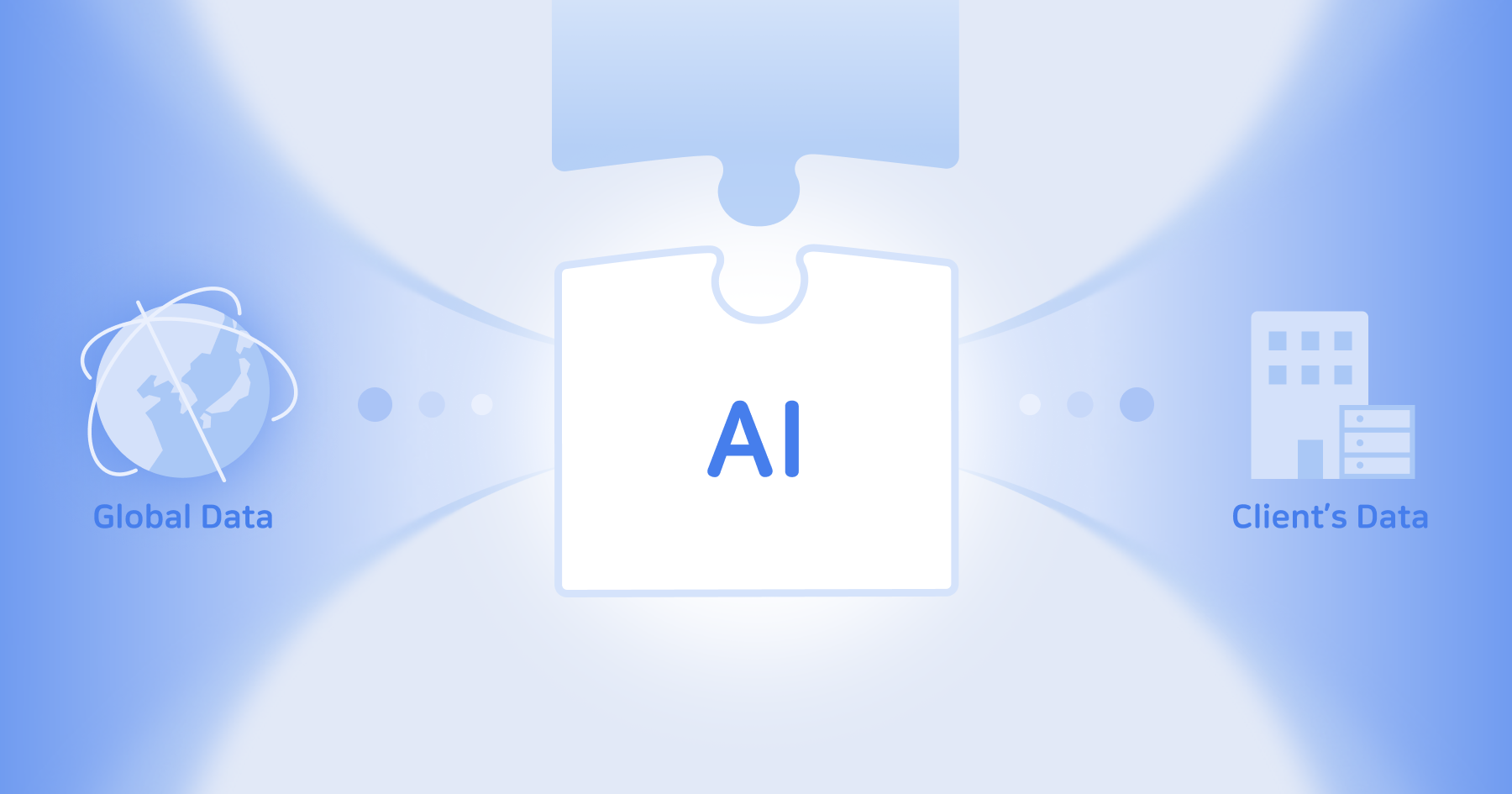
Telta addresses this problem using AI. Leveraging vast global job data, it proposes skillsets tailored to specific industries and jobs, and then fine-tunes them using a company’s internal data such as job descriptions and business reports to build customized skillsets aligned with the organization’s unique context and strategy in a fraction of the time. This represents the most practical and efficient solution to the persistent “problem of unmeasurability” in HR.
(2) Automating the Competency Diagnosis and Assessment Process
Obtaining highly reliable data requires continuous, iterative diagnosis and assessment rather than a one-off event. Telta automates the entire diagnosis and assessment process to dramatically reduce the administrative workload for both HR teams and employees as well as accelerate data accumulation. In fact, a recent case study demonstrated a 70% reduction in operational resources for the working-level staff by running their assessment and diagnosis process on Telta.
This AI-driven automation liberates HR professionals from the endless operational burden of competency modeling and assessment management, allowing them to refocus on high-value initiatives like employee development or organizational culture improvement. It efficiently develops diagnostic items based on defined skillsets, analyzes results in real-time and automatically generates in-depth draft reports detailing individual strengths, weaknesses and the organization's overall competency landscape.

(3) Visualizing Organizational Competency for Strategic Decisions
Structured competency data obtained through Telta’s AI-driven solution visualizes previously intangible assets. HR teams and executives can finally answer critical questions with data-backed confidence such as “What specific skills and in what quantity does our company possess?” “What is the extent of the skill gap between our current competencies and the core ones required for business strategies going forward?” and “Who possesses the optimal skill combination for this new project?” We are already seeing real-world applications where this competency data captured by our solution drives tangible outcomes such as effectively measuring the performance of training programs for core competency building.
HR, It’s Time to Reignite Data-Driven Innovation
The vision of data-driven HR was never wrong. It simply lacked the highly reliable data necessary to bring it to life. In particular, objectively measuring and digitizing the competencies of employees, an organization’s most critical asset, proved nearly impossible with traditional methodologies.
AI is the key to overcoming these legacy hurdles and delivering on the value promised by data-driven HR. Data-driven HR operations including securing and developing talent based on objective data, proactively controlling organizational risks and maximizing the potential of all employees are no longer a theory. It is now a reality.
With Telta, it is time to open a new chapter for HR.
Related Articles