.svg)
Internal Mobility in the AI Era: 3 Criteria for Assessing AI Competency


As AI moves into everyday work, the way employees work is changing fast. AI is now involved in core tasks like analyzing information, solving problems, and writing documents, so the competencies each role requires are being redefined too. According to Microsoft’s 2026 Work Trend Index, the more employees use AI, the more time they spend on high-value work, and redesigning work around AI has become a key task for leaders.
In the end, the challenge for organizations is deciding how to redeploy people to fit this changed work. But traditional evaluations alone make it hard to tell who is ready to work alongside AI, who needs reskilling, and who could move into a different role. That’s why internal mobility decisions should rest on an AI competency assessment that objectively shows how well each employee uses AI.
In This Article
- As AI changes how work gets done, companies need to rethink what roles and training their people need.
- This article lays out three criteria for an AI competency assessment, the starting point for internal mobility.
- Telta’s AI Literacy Assessment helps you identify individual and organizational skill gaps and decide who needs training or a new role.
Why AI Makes Workforce Redeployment a Priority for HR
As AI Takes Over Research and Routine Tasks, the Way People Work Is Changing
Amy Coleman, Microsoft’s Chief People Officer, has said that AI can’t replace people, but it is changing how people work. Because much of the work people used to do can now be automated, everyone has to keep learning new skills to adapt to a changing workplace. Microsoft has accordingly said it will keep investing in new skills, including AI, as the company goes through organizational change.
As AI spreads across companies, processes like report writing, information search, data interpretation, and the automation of repetitive tasks are being reshaped quickly. To respond, HR needs to first gauge employees’ current AI proficiency with an AI competency assessment, then design development plans and HR strategy around the results.
Internal Mobility for Reshaped Work Starts With a Competency Assessment
Turning Employee Capabilities Into Data Reduces Trial and Error and Builds Buy-In
When work is being reshaped, deciding where to place people and how to develop them starts with an accurate read on their current competencies. If you launch a one-size-fits-all curriculum without knowing where people stand, those who can’t keep pace will inevitably fall behind as AI changes their work. The company spends money without getting the results it expected, and employee motivation drops.
The same goes for internal mobility. Decisions based only on a manager’s intuition or past performance can make it hard for employees to accept organizational change. So set standardized criteria grounded in credible frameworks and real company data, use an AI competency assessment to confirm each employee’s AI proficiency, and then design redeployment and development strategies based on the results.
Start With an AI Literacy Assessment, the Essential Skill of the AI Era
Don’t Just Check Whether People Use AI. Check Whether They Understand and Handle It Well.
For an AI competency assessment, “Do they use AI or not?” isn’t enough. What matters is whether people understand how AI generates answers, can judge where errors might occur, and can explain when human review is needed. So what criteria should an AI competency assessment be built on?
Telta has developed an AI Skills Taxonomy, built on global frameworks and corporate job data, that maps the core skills across AI understanding, risk awareness, and AI application. Here, we’ll share three criteria you can apply to an AI competency assessment right away.
3 AI Competency Assessment Criteria for Internal Mobility
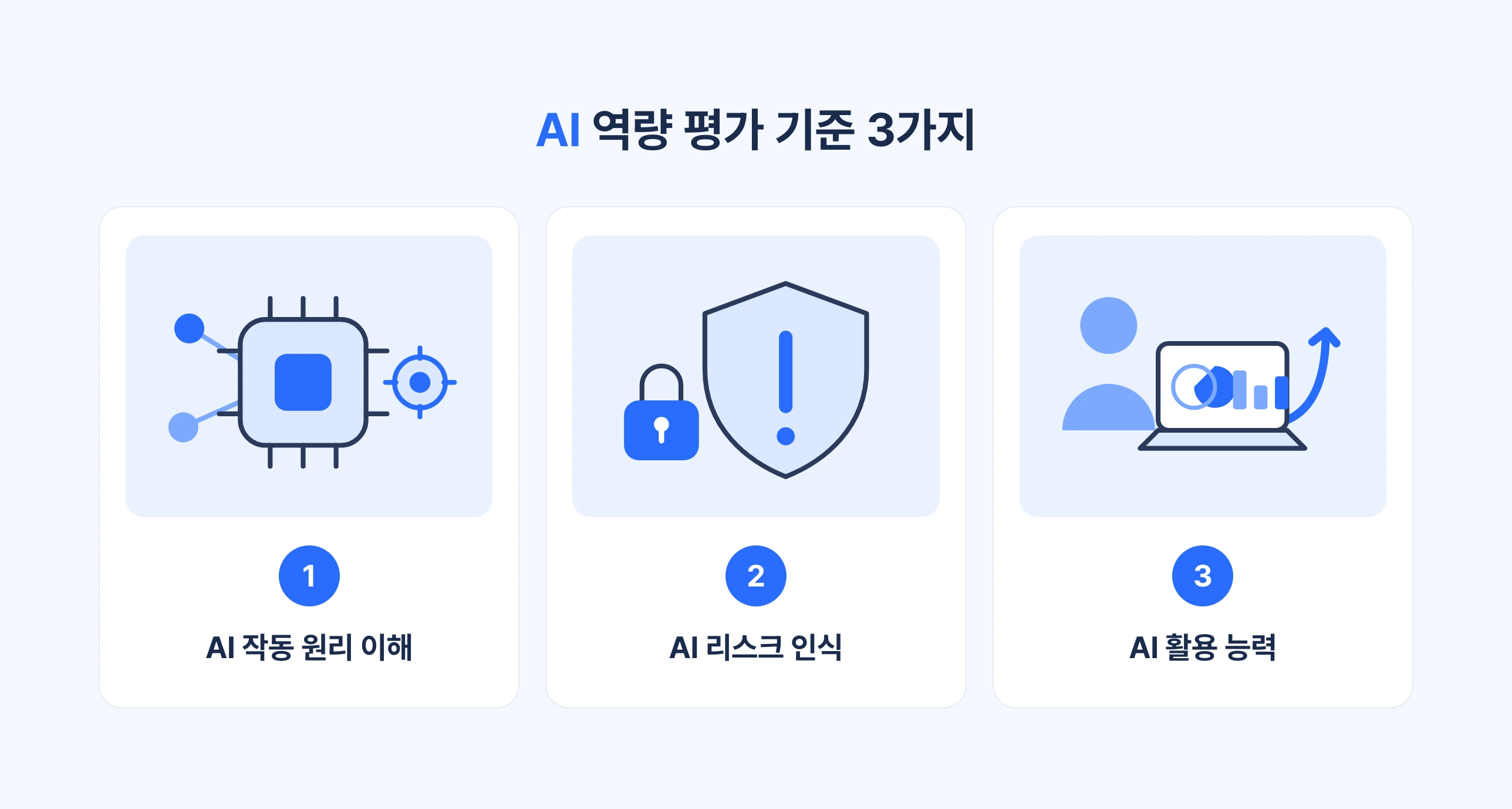
1. Do They Understand How AI Works?
Using AI at work starts with knowing what AI can and can’t do. AI produces answers quickly, but it doesn’t always make accurate judgments for you. It can make mistakes and misread context. Employees need to understand how AI generates answers and why errors happen; only then can they write prompts that fit the task and review the output properly.
2. Do They Recognize AI Risks and Use It Safely?
In a business setting, using AI isn’t only about productivity. Handling sensitive data such as internal documents, customer information, or hiring evaluations can create security risks. So you also need to confirm that employees can use AI safely. They should be able to judge what information must never be entered, how far AI output can be used, and how to check for biased answers.
3. Can They Use AI for the Right Purpose?
The last thing to check is practical application. Using AI well means more than typing in prompts; it means using AI as a tool that fits your role and goals and turning that into results. The assessment should evaluate whether people can design purpose-fit questions and then review and refine AI output in the context of their work to produce a finished deliverable.
Effective Internal Mobility Starts With a Clear Picture of Where You Stand
Assessing your organization against these three criteria makes it much easier to set priorities for placement and training. But applying the criteria consistently across the organization, and turning the results into objective metrics, is hard to do with internal resources alone. A proven assessment tool can lighten the evaluation load and make the results more reliable.
Telta’s AI Literacy Assessment helps organizations weighing workforce redeployment get an AI competency assessment up and running quickly. Rather than just checking right or wrong answers like a multiple-choice test, it uses tasks based on real work scenarios to see how employees think and execute, and converts that into objective metrics.
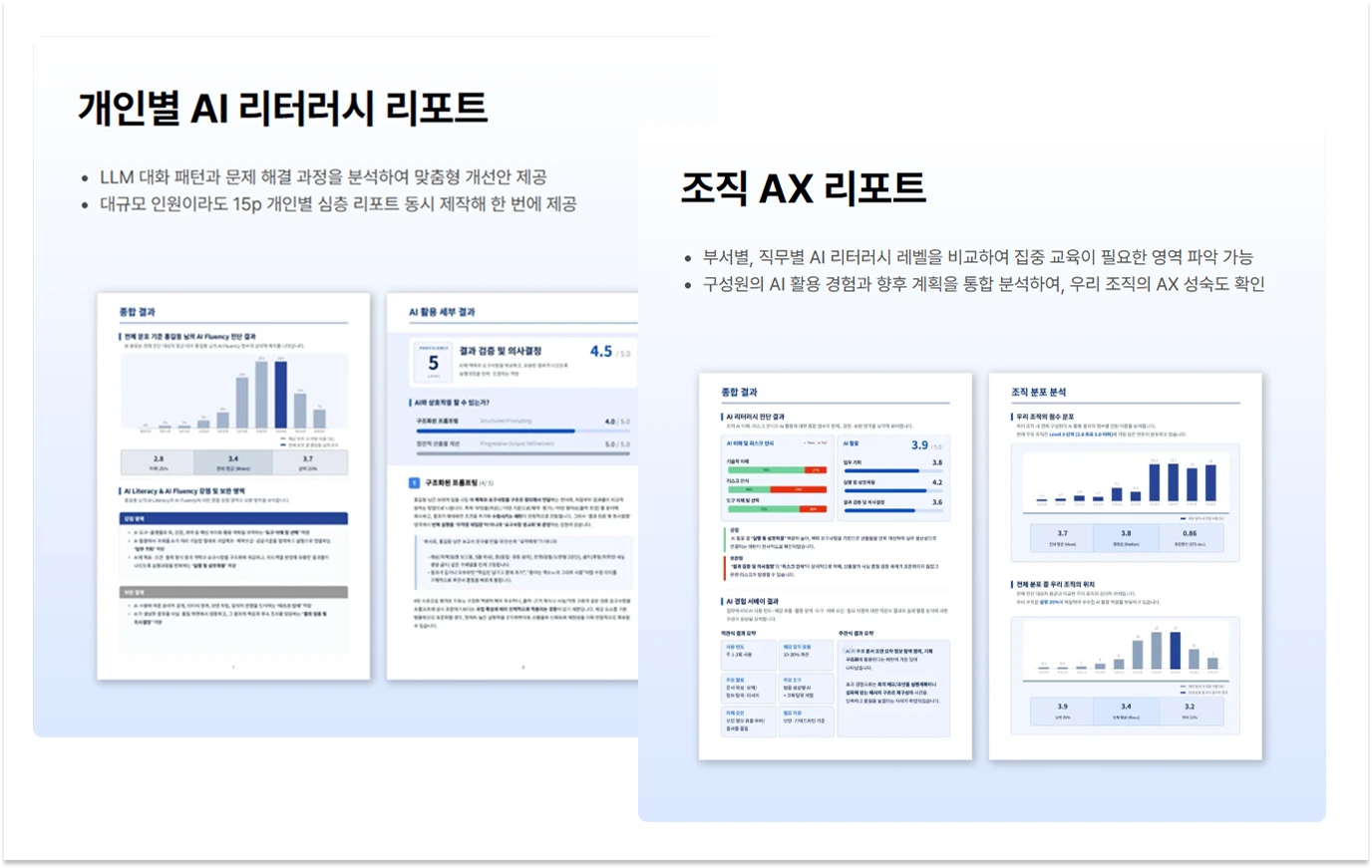
With this data, HR can see skill gaps across the company at a glance and more clearly distinguish who needs training from who is ready for a new role. If you’re not sure where to begin with redeployment in the AI era, start with Telta’s AI Literacy Assessment.
Related Reading
- How to Find AI Talent: A Guide to Assessing AI Competency
- AI-Era Talent Strategy: Filling the Skills Data Gap in Your HCM and HRIS
Related Articles
.webp)
.png)