.svg)
How to Find AI Talent: A Guide to Assessing AI Competency


Demand for talent with AI skills has grown rapidly over the past five years. Companies are looking for AI talent across a wide range of roles, from AI application developers and machine learning engineers to data scientists and AI product planners.
But as hiring demand has surged, companies face a new problem: an impressive tech stack and résumé alone can’t tell you how well a candidate will actually use AI on the job. So what does it take to define the AI competencies your organization needs and compare candidates against the same standard?
At a Glance
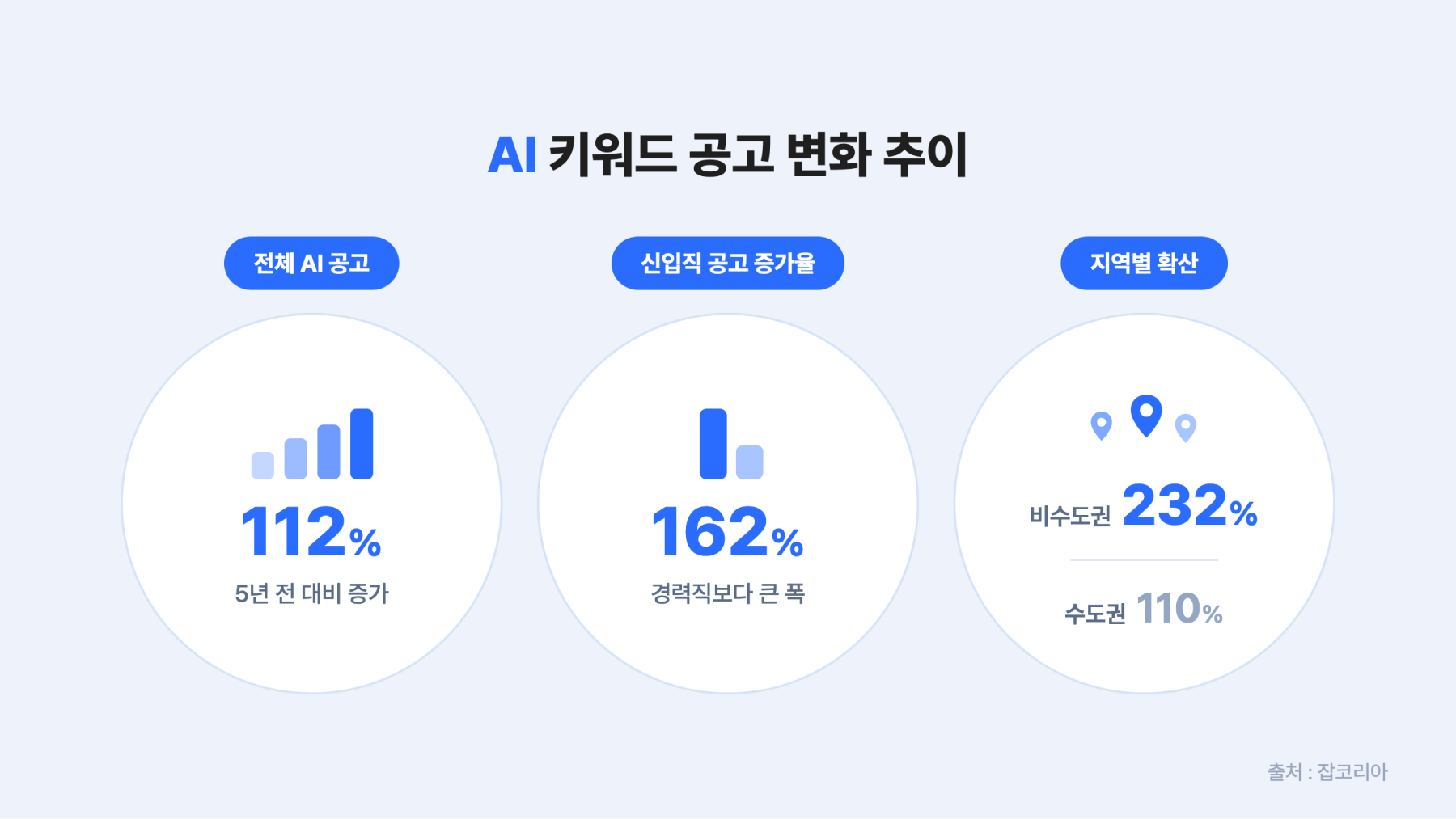
- AI job postings have grown 112% over the past five years, but credentials and experience alone make it hard to judge how well candidates can really use AI.
- You need concrete criteria for assessing candidates’ problem-solving skills and their ability to verify AI output.
- Telta’s AI Literacy Assessment analyzes how candidates write and refine prompts, their conversation logs, and their thought process to deliver objective data and a detailed report.
The Race for AI Talent: Finding It Is Hard, Assessing It Is Harder
AI Job Postings Up 112% in Five Years: AI Skills Are Now Table Stakes
According to JobKorea’s analysis of AI-related job postings (in Korean), postings that mention AI grew 112% over five years. Postings for entry-level roles rose 162% over the same period. AI is no longer confined to one industry; it is becoming a baseline competency across every industry.
Finding AI Talent Requires New Evaluation Criteria
The fiercer the competition, the more it matters to identify the AI talent that fits your organization. Yet many companies still evaluate candidates on the tech stack and experience listed on their résumés.
A tech stack and project history show what a candidate has done in the past. But the competency that truly matters when using AI on the job is the ability to solve unfamiliar problems efficiently with AI.
Say a data analyst with five years of experience is handed a new assignment. Their résumé won’t tell you how they approach the problem: in what order they narrow it down, how they revise their prompts, or whether they use the AI’s answer as is or take the time to verify it. Past experience alone can’t show you any of that.
That’s why companies need to change how they evaluate. It’s not enough to confirm what a candidate has done; you need to see firsthand how they make judgments and get things done in a real work situation.
How to Assess AI Competency: Start with Understanding, Not Tool Experience
So how should you assess AI skills? When evaluating AI-related competencies, you need to look beyond hands-on experience and consider whether candidates understand how AI works and recognize the risks that come with using it.
✅ Criteria for Assessing AI Competency
1. AI Understanding and Risk Awareness
Assesses whether candidates understand how AI works and where its limits are, and whether they can use it safely.
- Technical understanding: Understands how AI works and what its limitations are.
- Risk awareness: Recognizes risks such as errors and bias in AI output and exposure of sensitive data.
- Tool selection: Chooses the right AI tool for the purpose and requirements of the task.
2. AI Application
Assesses practical, on-the-job ability by looking at what candidates actually produce with AI.
- Plan: Defines the task to apply AI to on their own and sets clear goals and scope.
- Execute: Designs effective prompts and carries out the task by interacting with an LLM.
- Review: Critically reviews AI output and makes the final decision.
The competencies required differ from role to role, but candidates applying for the same role should be held to the same core competencies and behavioral standards. That reduces evaluator subjectivity and lets you compare candidates’ results on equal terms.
Related Reading
- Workplace AI Literacy: What Exactly Should You Assess?
- How to Assess Real Ability: A Guide to AI-Free Competency Assessment
Turn Problem-Solving Skills into Data with Telta’s AI Literacy Assessment
Telta’s AI Literacy Assessment isn’t a simple knowledge quiz with right and wrong answers. Candidates receive scenario-based tasks drawn from real work and solve them with an LLM, in a simulation that closely mirrors an actual work environment.
Along the way, Telta analyzes not only the final output but also the candidate’s thought process and behavioral data (conversation logs). It visualizes practical skills that used to be invisible, such as how candidates plan the task, how they structure and refine their prompts, and whether they properly verify the facts and risks in the AI’s answers, as data you can grasp at a glance.
Built on Telta’s AI Skills Taxonomy, which draws on global big tech frameworks and real-world job data, the assessment goes beyond a simple scorecard to deliver a detailed report on each candidate’s strengths, weaknesses, and specific behavioral feedback.
.webp)
When you evaluate candidates for AI skills, don’t rely on credentials or past experience alone. With Telta, you can measure the practical AI problem-solving skills your organization really needs with quantified data.
Related Articles
.webp)
.png)