.svg)
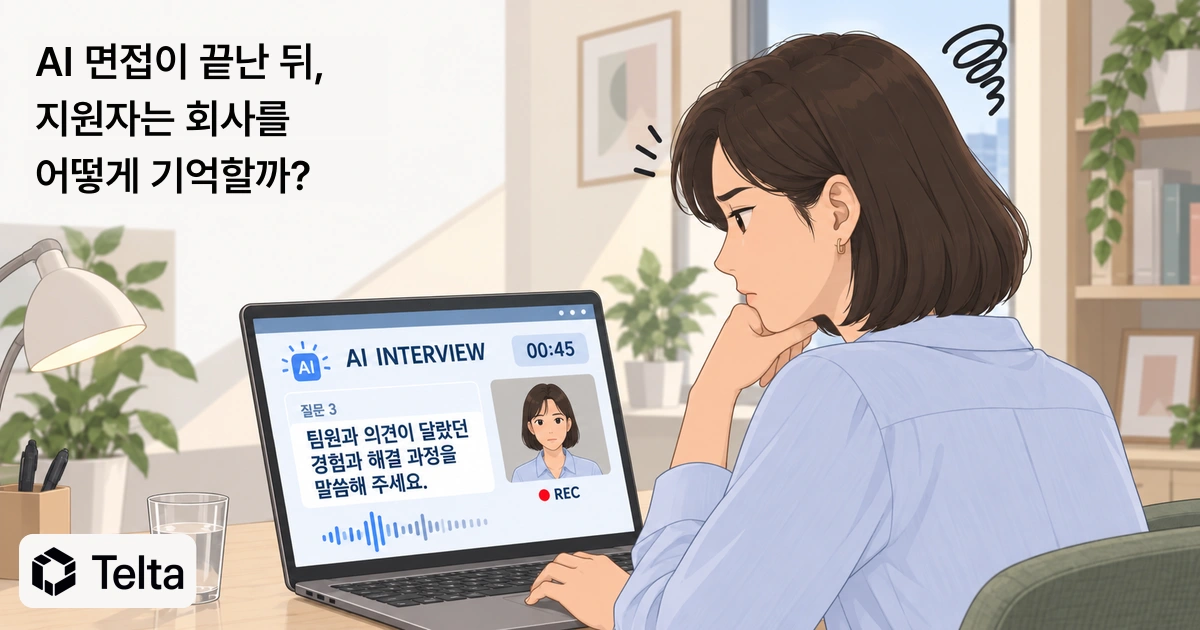


Companies adopt AI to cut the time interviews take. Candidates, meanwhile, use the same process to size up what kind of company they’d be joining. Both sides sit through the same interview, but they’re looking at different things.
A recent AI interview video posted by the TikTok account The Dreadful Studio put that gap on display. When the candidate answers in gibberish, the on-screen interviewer, smiling and listening a moment earlier, suddenly turns hostile. Inc., which covered the video on October 8, described it as staged for laughs. There’s no confirmation that it happened in any real company’s hiring process, so the clip can’t tell us much about a specific product or about AI interviews in general.
It does raise a question worth asking, though. When a candidate doesn’t understand a question, or feels their answer was misunderstood, is there anyone at the company they can keep the conversation going with?
While You Evaluate Candidates, They Evaluate You
For organizations that see a high volume of candidates, repeating the same questions and coordinating schedules is a real burden. When AI takes over part of the conversation, recruiters can spend that time on other work. Candidates may also be spared the hassle of showing up at a set time and place.
But an interview is more than a process for submitting answers. Candidates want to know what work they’d actually be doing and how the people they’d work with make decisions. They also want to know their experience came across. The interview is as much a chance for them to learn about the company as it is for the company to learn about them.
Say a question doesn’t fit a candidate’s background, and they try to add context, but the next question starts before they can. The company’s records will show one answer logged, but the candidate may feel they never got to finish their story. The same thing happens when a connection drops or speech recognition gets their words wrong. If a company only watches throughput, experiences like these are easy to miss.
Look Past the Smooth Demo to What Happens When Things Break
When you evaluate a tool, it’s natural to focus on the moments when questions and answers flow smoothly. In practice, what matters more is what happens when the conversation goes off script. Check whether candidates can hear a question again, add context they left out, and rejoin if a technical problem cuts their answer short.
That doesn’t mean AI has to handle all of this. It means deciding in advance what the tool will handle and what people will pick up. A button that connects candidates to a human isn’t enough on its own. You also need to decide who receives those inquiries, how answer logs and errors get reviewed, and who makes the call again when needed.
That’s why leaders deciding whether to adopt a tool should go through the process themselves, as a candidate would. Rather than feeding it only clean answers, ask it to repeat a question or test what happens when the connection drops. When hiring managers take part, they may raise questions the recruiting operations team didn’t think of: Can a candidate understand the actual role from this conversation alone? Can they explain their experience fully?
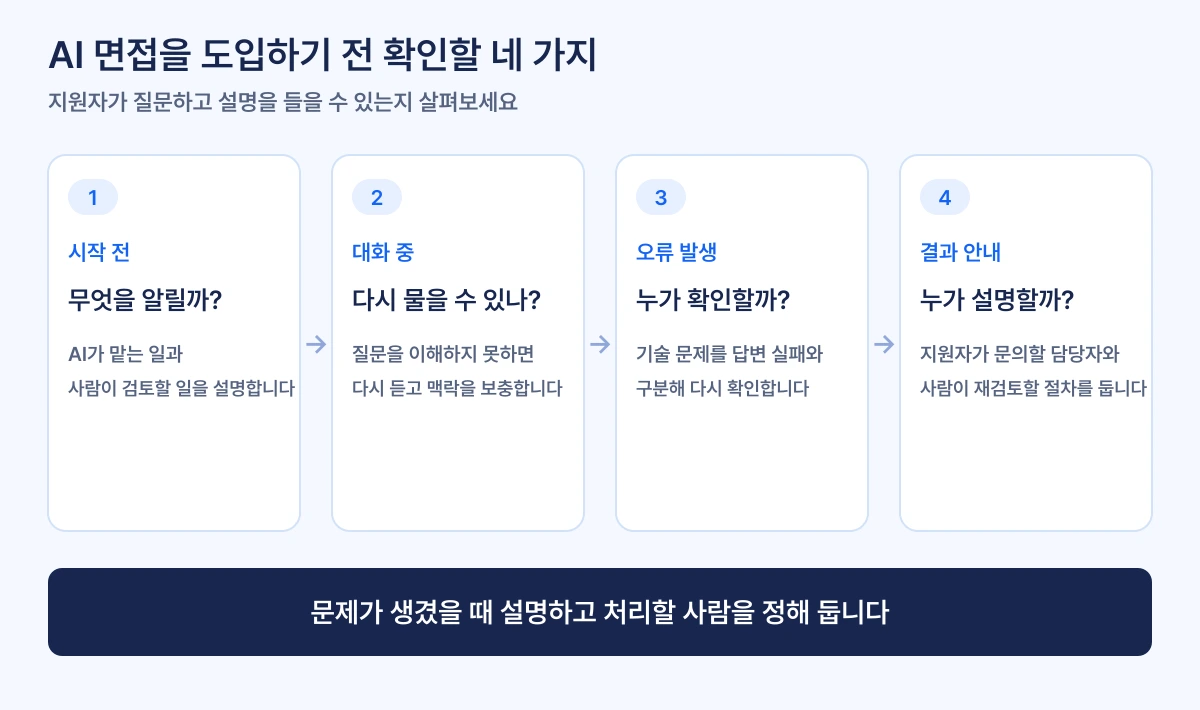
An Interview Run Under Your Name Needs Someone to Explain It
Reading questions aloud and recording answers is one thing. Interpreting those answers and deciding who gets the next interview is another. Candidates can’t tell the difference just by looking at a screen. Before the interview starts, explain what the AI handles and what people will review, and tell candidates where to go with questions about the results. That cuts down on confusion.
This isn’t a promise to change the outcome on request. It’s about telling candidates what can be reviewed again if something went wrong and where to send additional context. If a company saves time through automation but leaves candidates searching endlessly for someone to contact, that efficiency has come at the cost of the candidate’s experience.
What a company needs to decide first is where human judgment belongs in its hiring process. Settle which parts people will own, whether that’s explaining the role, handling exceptions, or making the final call, and then choose a tool. Your operating model will be clearer for it. Whether you use AI interviews doesn’t by itself determine the candidate experience. How your company responds when the conversation stalls can.
What candidates remember is less likely to be the name of the interview tool than their first conversation with your company. Making sure that conversation reflects how the company wants to be seen is a job for both the hiring team and the leaders the new hire will work with.
Related Reading
- AI Interview Tools: Replacing the Interviewer vs. Supporting One
- Interviewing in the AI Era: Why Your Scorecard Matters More Than Your Questions
References
Related Articles