.svg)
Interview Notes: Are Clova Note, Tiro, and Daglo Good Enough?


Interview Intelligence Series, Part 1 of 2
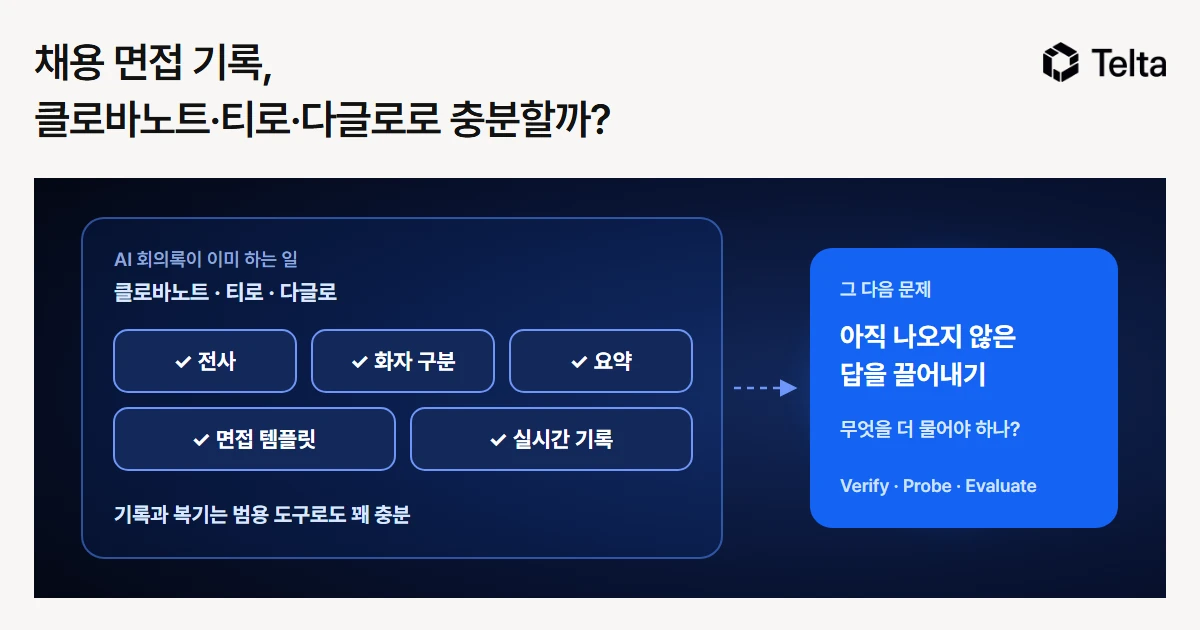
We ran the same 23-minute interview through three AI meeting notetakers. The short version: in this test, general-purpose notetakers were good enough for recording and reviewing an interview. The problems started after that.
When you sit down to write an evaluation after an interview, you end up relying on memory. That’s why some teams now leave an AI notetaker such as Clova Note (Naver’s AI transcription app), Tiro, or Daglo (both Korean AI note-taking services) running during interviews.
The question is simple. If the goal is to capture an interview accurately and review it later, is a general-purpose AI notetaker enough?
The Short Answer
1. For recording and review alone, general-purpose AI notetakers held up well. In this test, Tiro was the most reliable on transcription, speaker separation, and technical terms.
2. The bigger differences showed up in the summaries, not the transcripts. Some summaries dropped external factors, credited the company’s actions to the candidate, or turned the candidate’s opinion into stated fact.
3. Some general-purpose tools now offer interview templates, plus live transcripts and summaries. Daglo’s “Interview” template even drafts an evaluation, and Tiro shows the transcript and a summary while you’re still recording.
How We Ran the Test
We wrote a script of about 23 minutes and 30 seconds for an interview with an experienced merchandiser (MD) at a household goods brand, then recorded the interviewer and candidate with synthetic voices. Both the candidate and the company are fictional. The interview was conducted in Korean.
We deliberately built in answers that deserve a second look.
1. Recording: Good Enough for Capture and Review
On numbers, all three tools got the key figures right, including KRW 3 billion, KRW 2.5 billion, 32%, the 20% ad budget increase, and KRW 12,900.
On speaker separation, Clova Note (with two speakers specified) and Tiro stayed accurate for the full 23 minutes. Daglo, from the midpoint on, inserted short utterances that never happened and attributed them to a separate speaker.
We also compared terms that come up often in MD interviews. Because the interview was in Korean, errors appear as Korean sound-alike words.
| Actual term | Clova Note | Tiro | Daglo |
|---|---|---|---|
| SKU | Misheard (e.g., “schedule”) | SKU | Misheard (e.g., “schedule,” “screw”) |
| MOQ | Garbled sound-alike | MOQ | Garbled sound-alike |
| Contribution margin | Misheard (“park profit”) | Contribution margin | Mostly misheard, sometimes correct |
| CS team | Garbled sound-alike | CS team | Misheard (“casting”) |
| ROAS | roas | ROAS | ROAS |
Results from a single AI-generated mock interview with synthetic voices. Results may vary with real meeting conditions, microphones, and speakers’ accents.
We also ran the same interview through Telta Interview Pro. Speaker separation and key figures were reliable, and it got four of the technical terms right: SKU, MOQ, contribution margin, and ROAS (“CS team” came out as “casting”). Because it captured audio through a microphone, we didn’t rank it against the others.
Based on this test alone, general-purpose AI notetakers already do a solid job of the “capture the interview and look it up later” problem.
2. Can You See the Notes Before the Interview Ends?
| Clova Note | Tiro | Daglo | Interview Pro | |
|---|---|---|---|---|
| Live transcript during the interview | Not shown while recording on web Converted after recording | Appears as people speak | Not shown while recording on web Transcribed after recording | Shown in real time |
| Speaker separation | After recording | After recording (Pro plan) | After recording | Real time |
| Live summary during the interview | Generated after recording via the “Summary” button | Chronological summary in real time | Default and template summaries after recording | Answer-by-answer summaries |
Checked on October 12, 2026, using the first six to seven minutes of the same audio. Clova Note and Daglo were tested with web (PC) recording; we did not check their mobile apps. Tiro is based on its official documentation.
Tiro shows the transcript and a chronological summary while recording. Interview Pro also provides a live transcript and answer-by-answer summaries. Up to this point, though, it overlaps with general-purpose products.
The difference begins when you use those notes to decide what to ask next, right now. Recording answers that have already been given well is one problem. Drawing out answers that haven’t come up yet is a different one.
3. But the Summaries Shifted Important Context
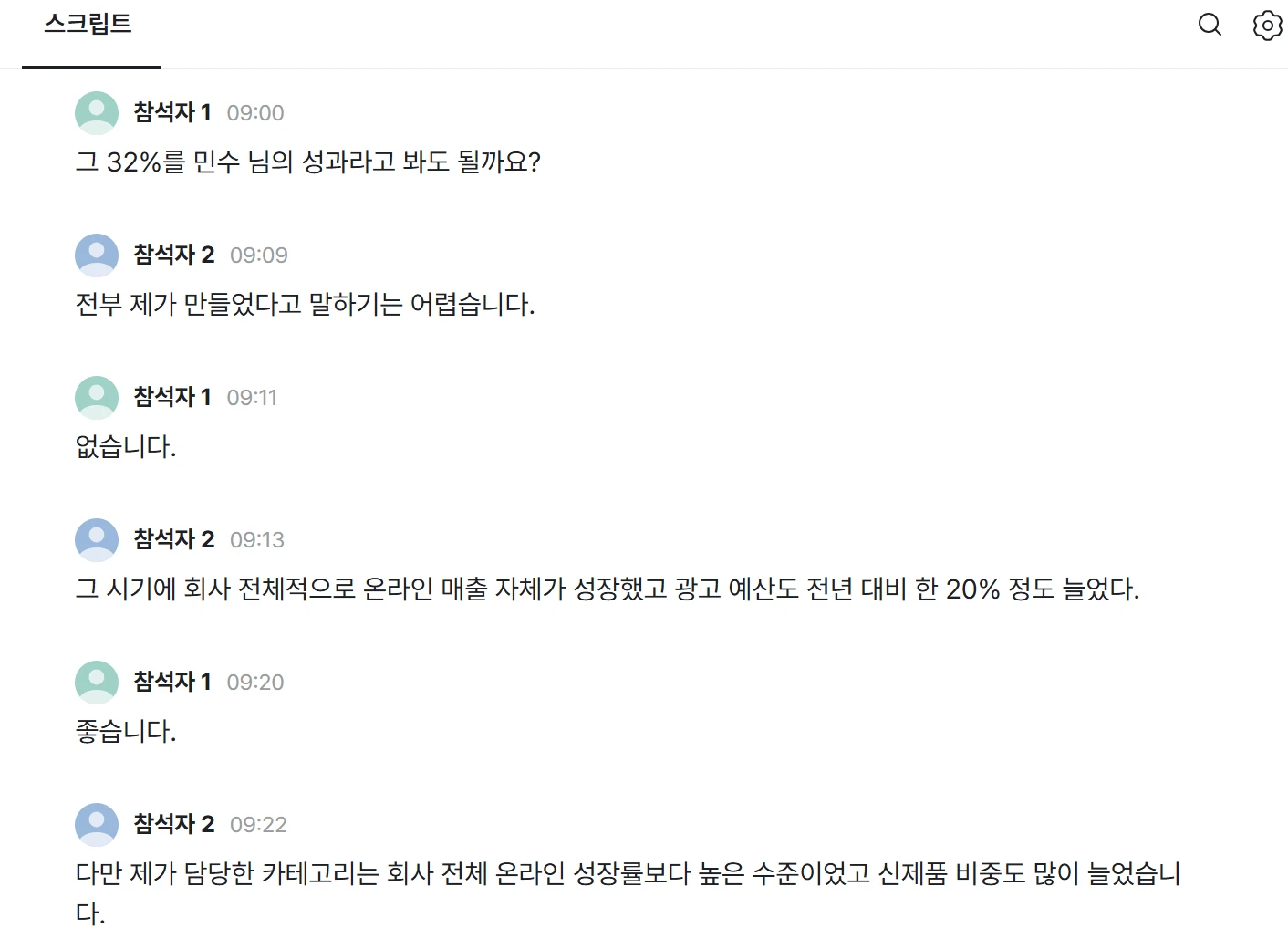
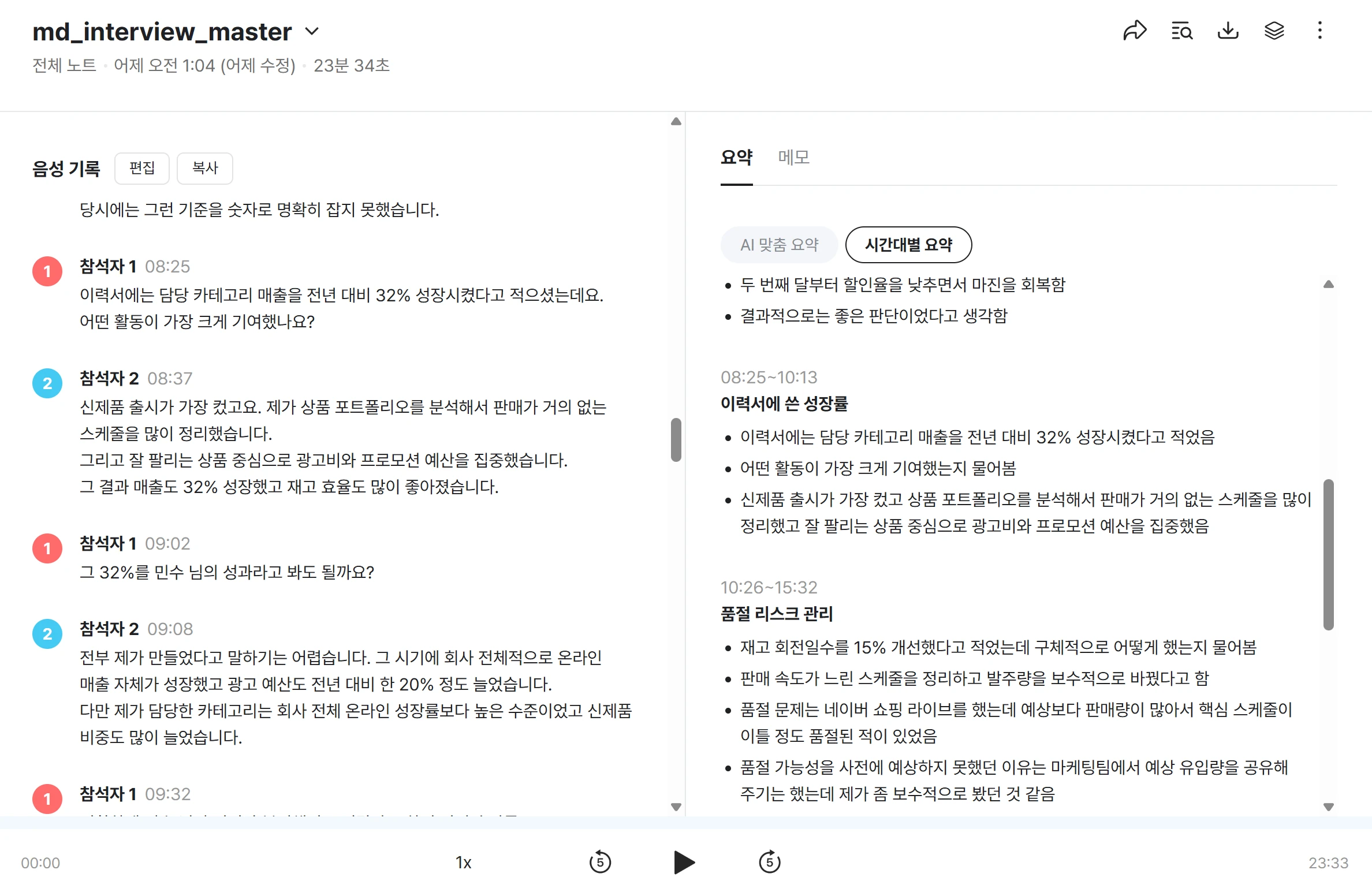
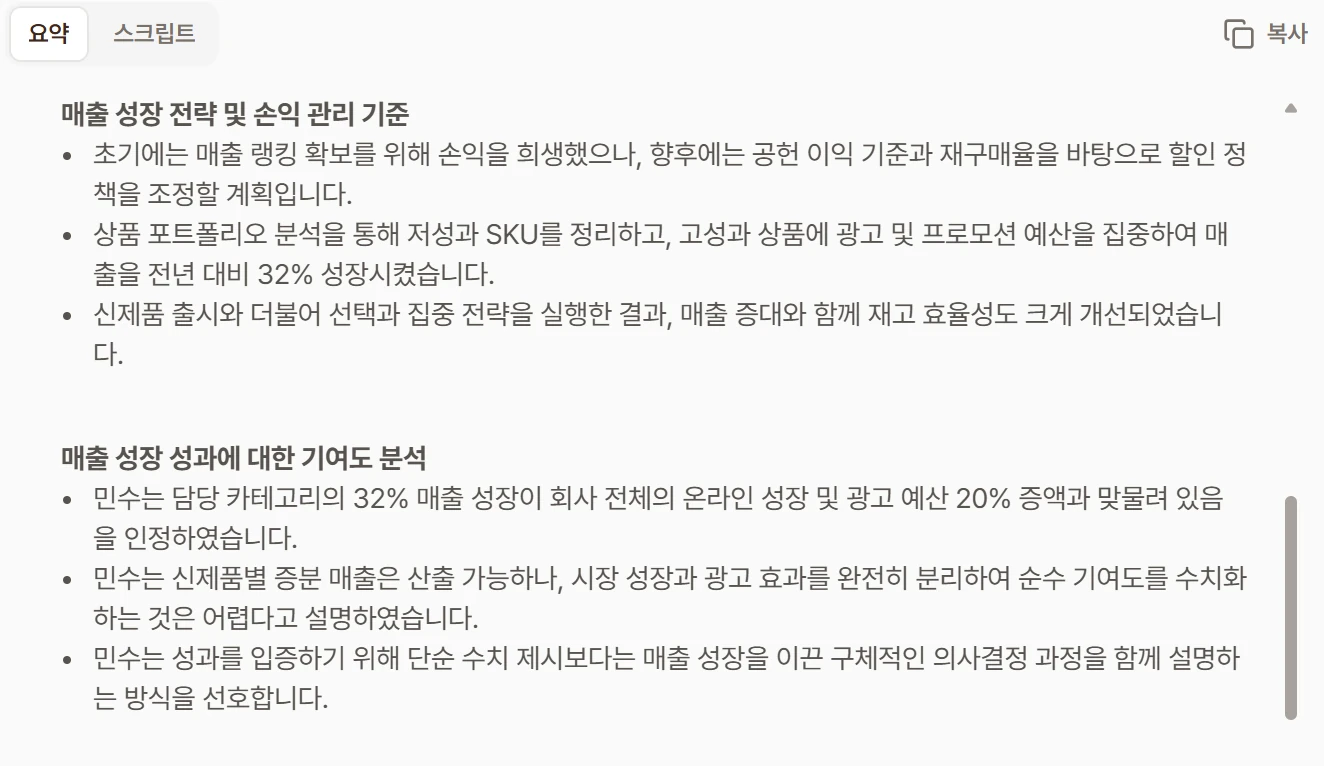
Asked, “Can we count that 32% growth as your achievement, Minsu?” the candidate said that company-wide online sales had grown during the same period and the ad budget had risen about 20%, so it would be hard to claim all of it as a personal achievement.
Clova Note: External Factors Dropped Out of the Summary
The summary for that time segment kept the candidate’s activities but left out the external factors: the higher ad budget and the company’s overall online growth.
Daglo: External Factors Were Listed as the Candidate’s Achievements
In the default summary, “achieved 20% ad budget growth” appeared under the candidate’s sales strategy and results. A budget increase made by the company could easily read as the candidate’s personal accomplishment.
Tiro: Context Preserved, but One Opinion Became Fact
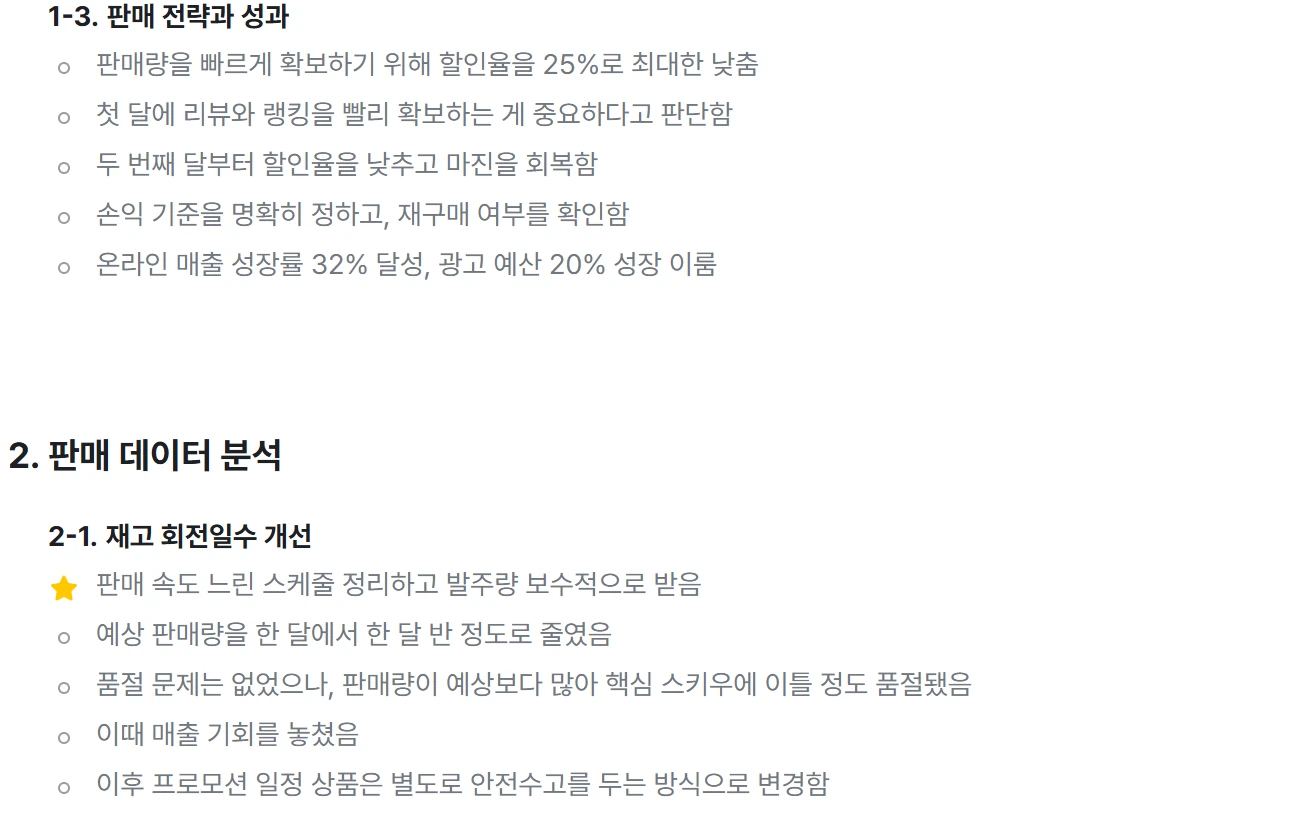
For the 32% growth exchange, Tiro faithfully kept both the company-wide growth and the higher ad budget. In another exchange, however, it presented “the product’s own competitiveness” as an established fact, even though the candidate had said they never verified it directly.
4. Meeting Notetakers Now Produce Interview-Ready Outputs
Tiro ships with a “Hiring Interview” template, and Daglo with an “Interview” template. The demand for structuring notes around hiring has already made its way into general-purpose notetakers.
Tiro: A Q&A Record
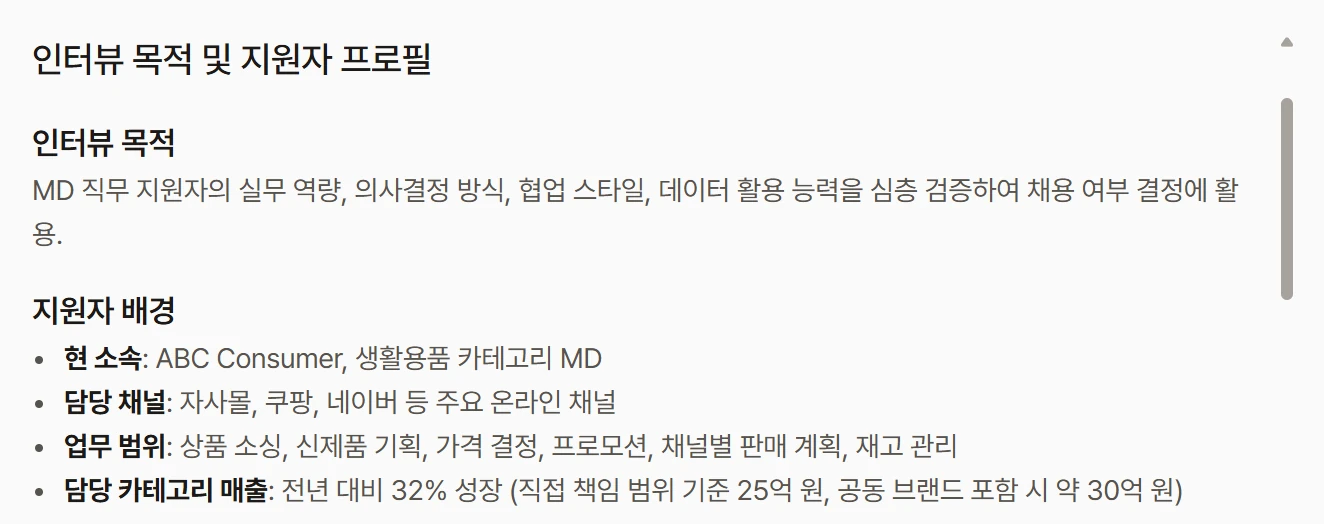
Rather than standing in for an evaluation, Tiro organized the conversation around questions and answers. It also faithfully kept the KRW 2.5 billion vs. KRW 3 billion discrepancy and the external factors behind the 32% growth.
Daglo: A Full Evaluation Report Without a Custom Prompt
Daglo’s “Interview” template generated a candidate overview, key competencies, personality and organizational fit, strengths, areas for development, and an overall assessment. Each judgment came with the supporting quote and a timestamp.
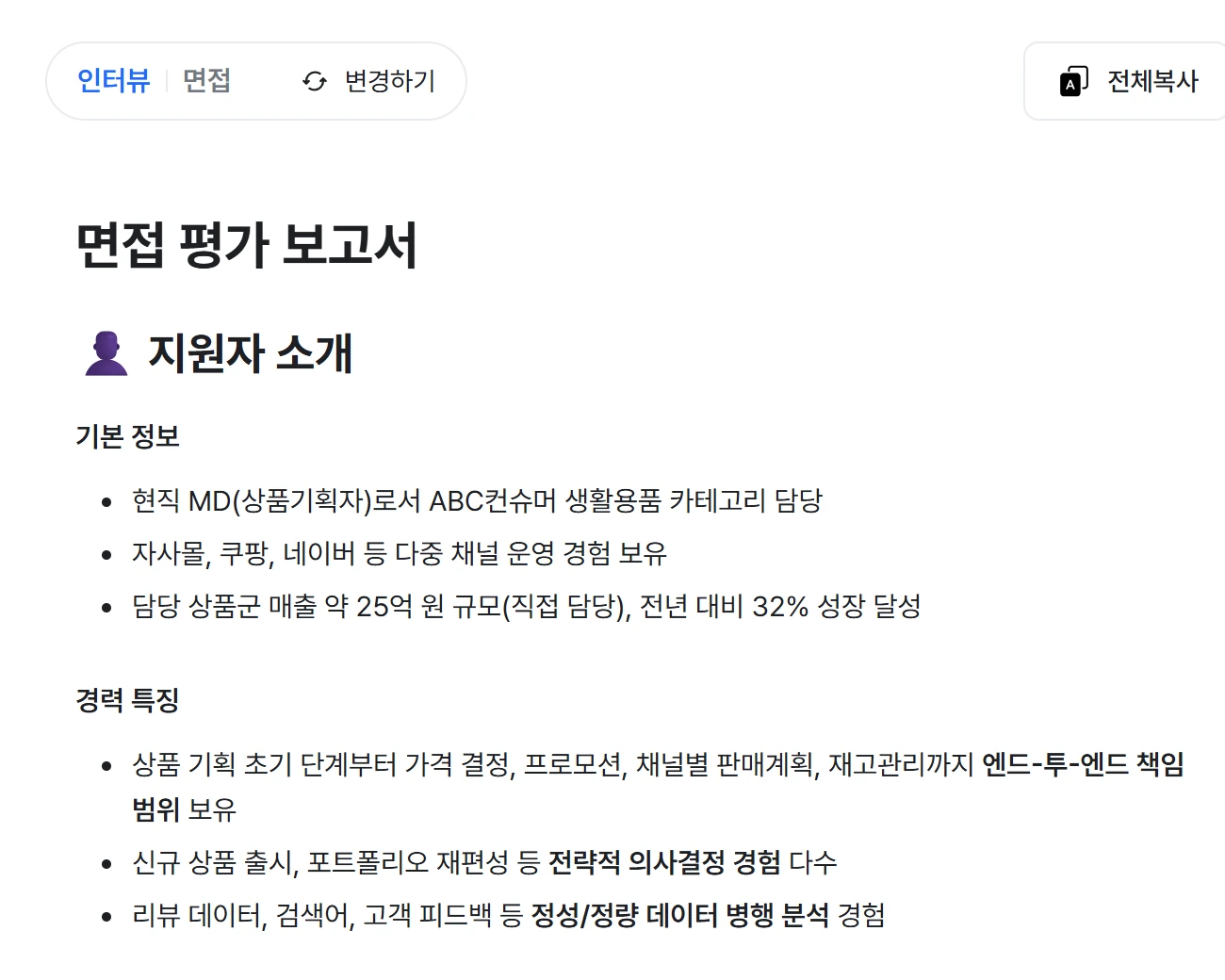
But when we ran the same audio three times, the role interpretation (“MD (marketing manager)” → “MD (merchandiser)” → “Merchandise Director”) and whether it recommended hiring changed every time.
Interview Note-Taking Is Already a Distinct Use Case for Global Notetakers
General-purpose notetakers in Korea and abroad treat hiring interviews as their own use case, a sign that the need for interview note-taking and summaries is now widespread. Beyond Tiro and Daglo, Notta (AI Interview Notetaker) and tl;dv (Hiring & Recruiting) do the same.
Official pages: Notta AI Interview Notetaker ↗ · tl;dv Hiring & Recruiting ↗
So Which Tool Fits Which Situation?
Telta Interview Pro
Need a tool that helps you decide what to ask next during the interview?
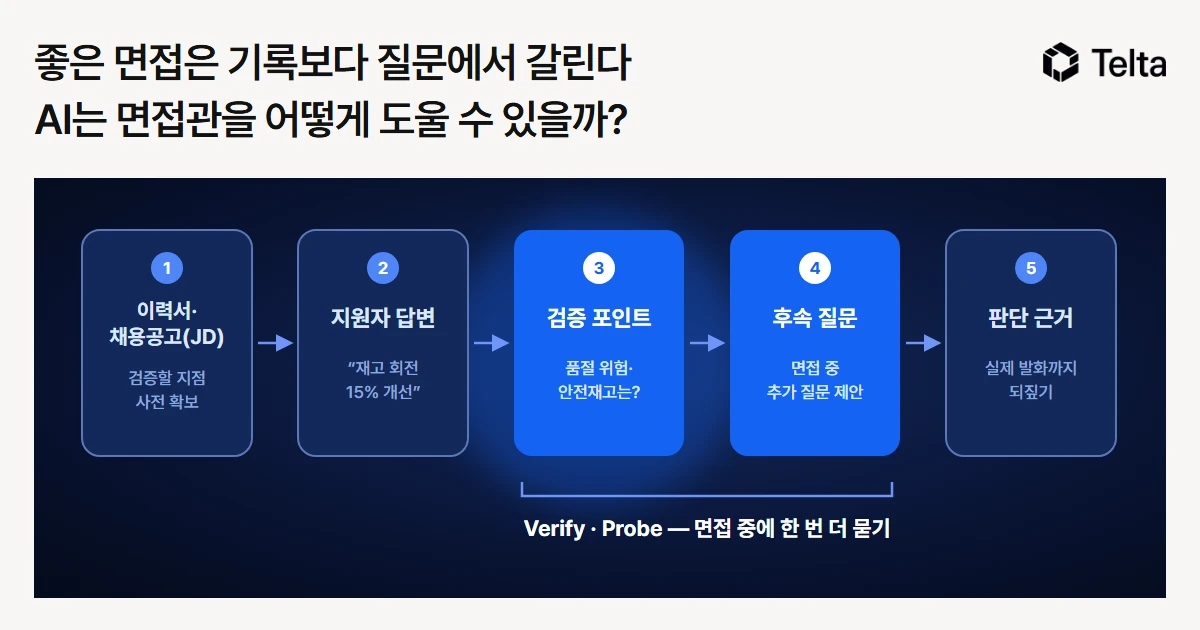
Beyond live transcription and summaries, Interview Pro reads the resume, the job posting, and the answer that was just given, then suggests points to verify and follow-up questions.
Start Interview Pro for Free →
Recording the Answers You Got Is Different From Drawing Out the Ones You Didn’t
In this test, general-purpose AI notetakers handled the first problem quite well. Note quality is about capturing what was said. Interview quality also covers what you should have asked. In the next article, we test whether AI can fill in the verification questions interviewers tend to miss in the moment.
Part 2: Better Questions, Not Better Notes: How AI Can Help Interviewers →
Test conditions: October 11–12, 2026; one AI-generated mock interview with synthetic voices, about 23 minutes and 30 seconds long. We used only each tool’s default features and templates, with no custom analysis prompts (Daglo’s “Interview” template was run three times). For Notta and tl;dv, we only confirmed the hiring use case on their official pages. These are observations under limited conditions and do not represent an overall performance ranking of any product.
Related Reading
- Better Questions, Not Better Notes: How AI Can Help Interviewers
- AI Interview Tools: Replacing the Interviewer vs. Supporting One
Related Articles