.svg)
3 Reasons AI Meeting Notes Aren’t Enough for Candidate Interview Records


89% of talent acquisition professionals say measuring quality of hire will become more important. Yet only 25% are confident they measure it effectively. They know it matters, but few can say they are actually doing it.
Nowhere is that gap wider than in the interview. 69% of companies name a poor interview process as the biggest factor dragging down quality of hire. The interview is the decisive gate for judging candidates, yet the records and evaluations meant to support that judgment are still often thin.
With the rise of AI meeting notes and note-taking tools, recording an interview has become much easier. These tools transcribe the conversation automatically and even pull out key points and action items. But is it enough to record an interview the way you would any other meeting?
💡 Article Preview
- An interview record should be evidence for evaluating the candidate, not meeting minutes.
- Handwritten notes, recording and transcription, and AI meeting notes each deliver more value when used for the right purpose.
- A good interview record ties together the intent behind each question, what the candidate said, the competency signals in their answers, and the questions for the next stage.
An Interview Record Should Be Evidence for Evaluation, Not Just a Transcript
A typical business meeting centers on discussing agenda items and making decisions. The notes capture who said what and what needs to happen next. A hiring interview is different. What the candidate says has to be interpreted and evaluated against the organization’s own standards, such as competencies and culture fit.
A record that simply captures what happened in the room can’t serve as a basis for judgment, because an interview record needs to be evidence for assessing a candidate’s competencies. However accurate the transcript, the decision later falls back on interviewers’ scores alone, and a clear judgment becomes hard to reach.
3 Reasons AI Meeting Notes Fall Short for Candidate Interview Records
The most important job of an interview record is not summarizing the conversation. It is turning the evidence for evaluation into data. The record should show how the candidate answered each question and which evaluation criteria each answer relates to. Only then can the recruiting team and hiring managers review the same material and reach a shared evaluation. If your organization uses AI meeting notes for interviews, here is what to watch for.
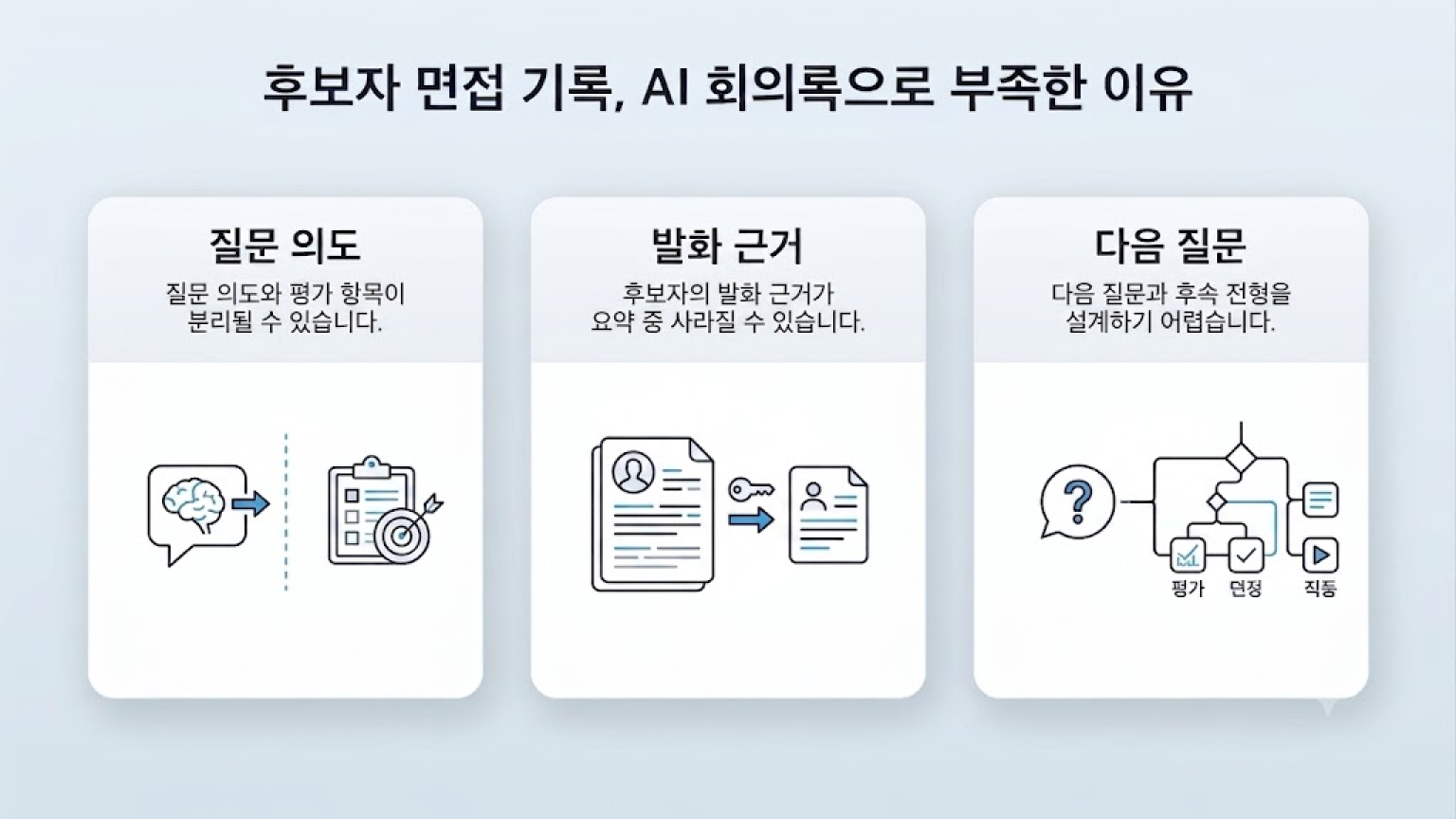
1. A Plain Transcript Can Disconnect Question Intent from Evaluation Criteria
AI meeting notes quickly organize what was said. But in a hiring interview, why a question was asked comes before what was said. The same accomplishment reads differently depending on whether the question was probing problem solving or collaboration style.
When the record is separated from the intent behind each question, interviewers later have to ask themselves, “Why did I ask that again?” The longer they wait, the less accurate that reconstruction becomes, until the intent is lost entirely. That is why we recommend recording not only each answer but also what the question was meant to find out.
2. A Condensed Summary Can’t Show a Candidate’s Real Competencies
Meeting-note summaries shorten sentences. In the process, important context can disappear: the words candidates used to describe their own role, or the criteria they cited for their choices. Yet a meeting to discuss a candidate’s evaluation needs exactly those details.
A conclusion like “strong problem solver” on its own is weak. The record should show which statement revealed how the candidate defined the problem, and which sentence showed them comparing alternatives.
3. Without Next Steps, It’s Hard to Carry the Process Forward
An interview doesn’t end with a single conversation. Some strengths are confirmed; other areas need more probing in the next interview or assignment. But if the record is only a summary, it’s hard to design the stages that follow.
A good record leaves you with questions. With a report that points to next steps, such as “communication skills confirmed; data-driven decision-making needs follow-up questions,” you can decide clearly what to do next.
Related Reading
- Is a Meeting Transcription Tool Enough to Record and Analyze Interviews?
- Interviewing in the AI Era: Why Your Scorecard Matters More Than Your Questions
Telta Interview Pro: AI Interview Support Built Solely for Hiring Interviews
Telta Interview Pro is an AI interview support solution that analyzes the conversation in real time and organizes the data you need for competency assessment. Beyond real-time transcription, it suggests the questions you need and automatically generates a competency report after the interview. No more scrambling to take notes by hand: based on what the candidate actually said, you get scores for each role-specific and core competency, along with the reasons behind them.
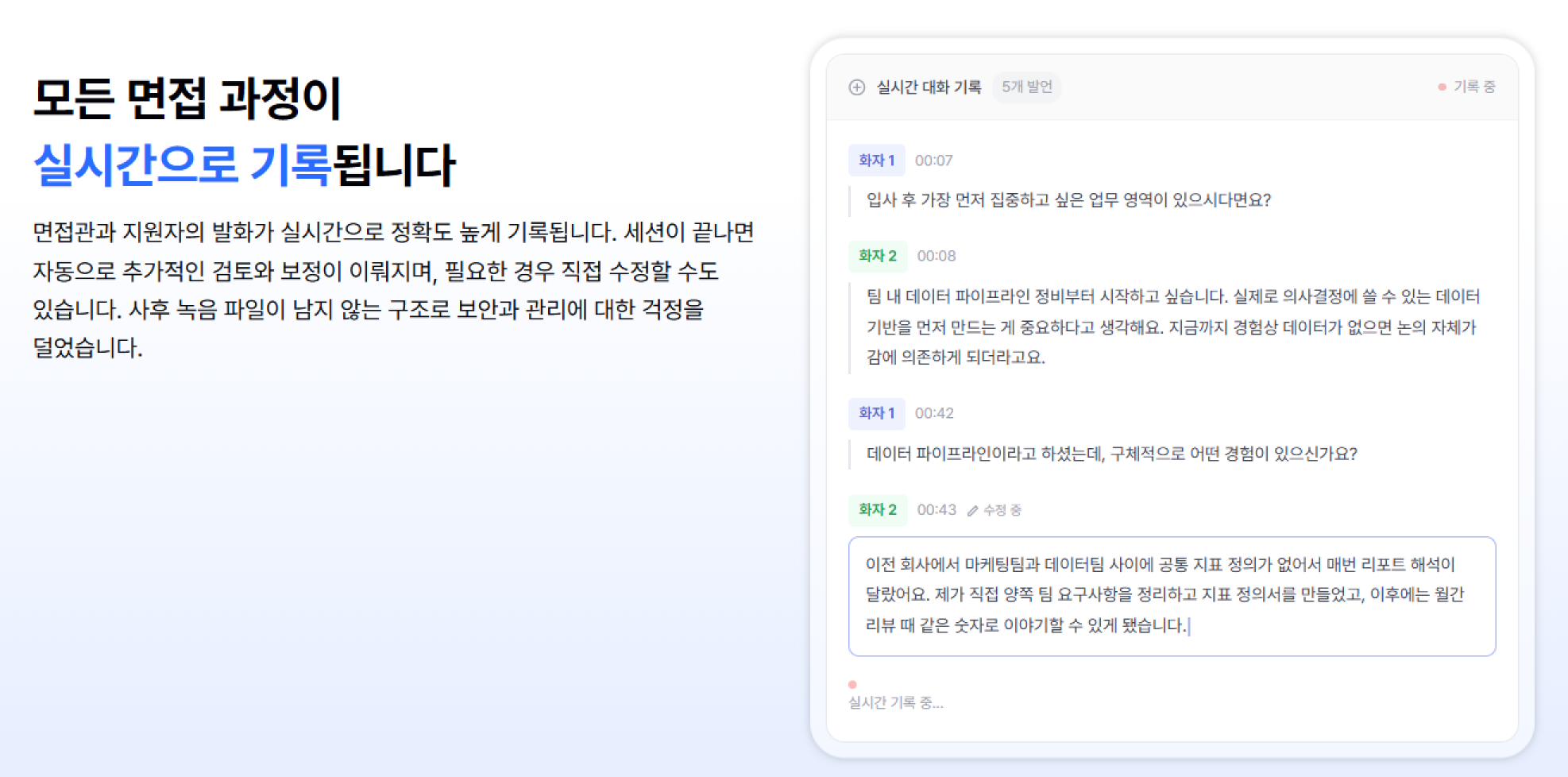
Telta Interview Pro does not make hiring decisions on behalf of interviewers. It structures the interview record as data so interviewers can ask sharper questions and make clearer judgments. While interviewers focus on the conversation, it records what the candidate says and organizes the competency signals in each answer, so the recruiting team and hiring managers can review candidates from the same evidence.
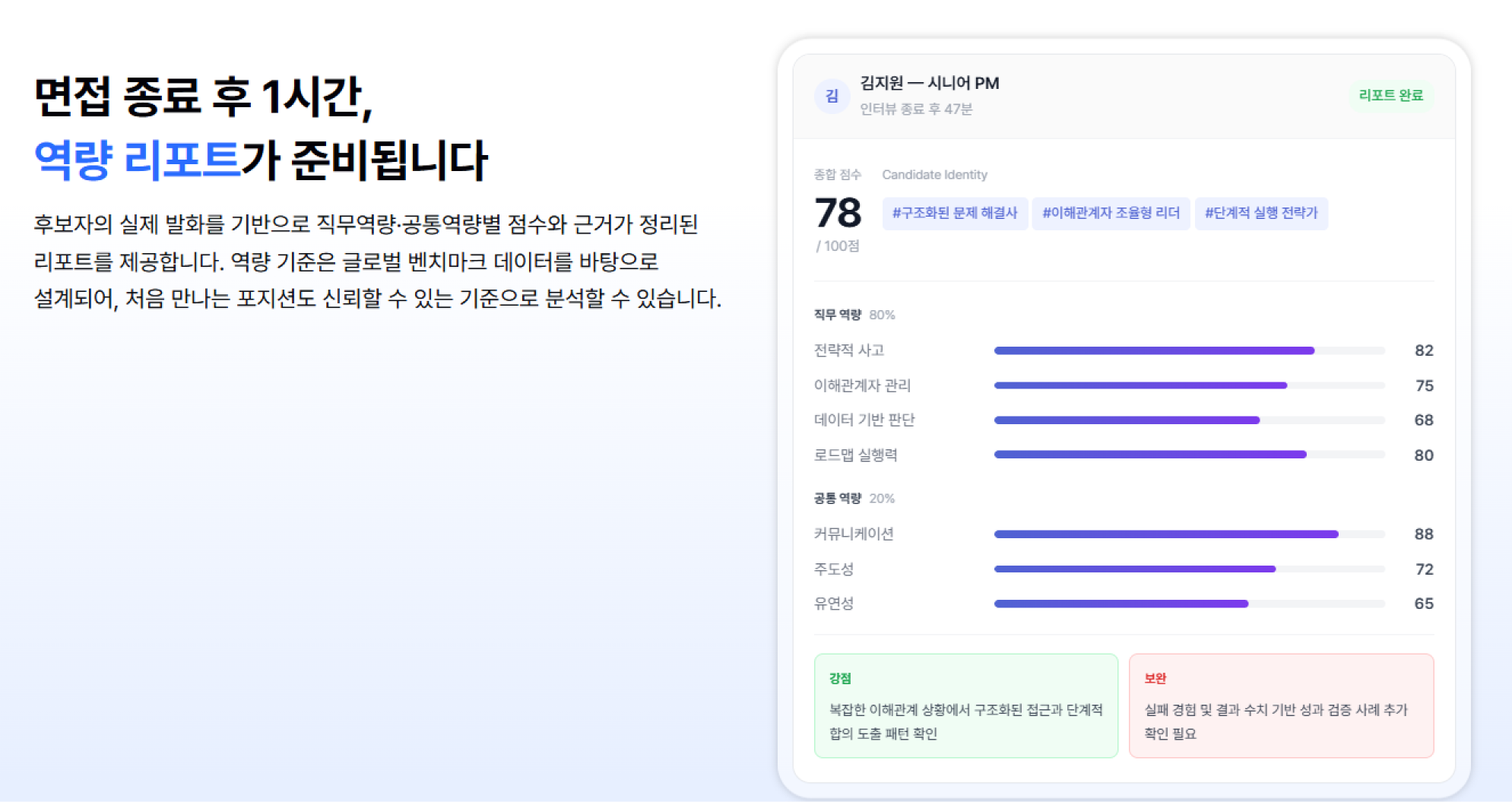
If your current AI meeting notes or handwritten notes don’t carry through to competency assessment, see how interview records connect to competency reports with a free trial of Telta Interview Pro. You can start using it in your very next interview.
Related Articles
.webp)
.png)